What Happens If a Range Hood Is Mounted Too High (Loss of Suction)?
When you install a range hood, the distance between the appliance and your cooktop is one of the most critical factors for performance. Many homeowners wonder what happens if a range hood is mounted too high (loss of suction), and the answer is a significant reduction in the unit’s ability to capture smoke, grease, and heat. When the hood sits beyond the manufacturer’s recommended height, the capture area effectively shrinks.
This leads to poor indoor air quality, lingering odors, and potential grease buildup on cabinetry. Understanding these dynamics helps you avoid costly errors during kitchen renovations or when replacing an aging ventilation system.
Immediate Consequences of Improper Mounting
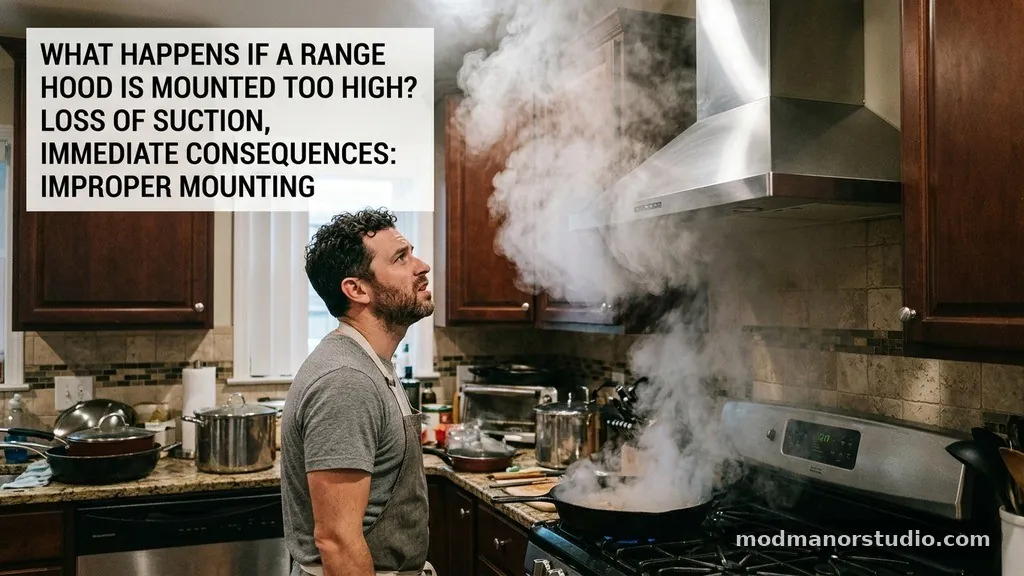
The primary issue when a unit is placed too high is the loss of the “capture zone.” Range hoods are designed to create an air curtain and a low-pressure area that pulls airborne particles upward.
If you move the hood further away, the rising heat and steam from your burners have more room to dissipate into the surrounding kitchen air. This means the fan must work significantly harder to pull in pollutants that have already escaped the hood’s primary intake area.
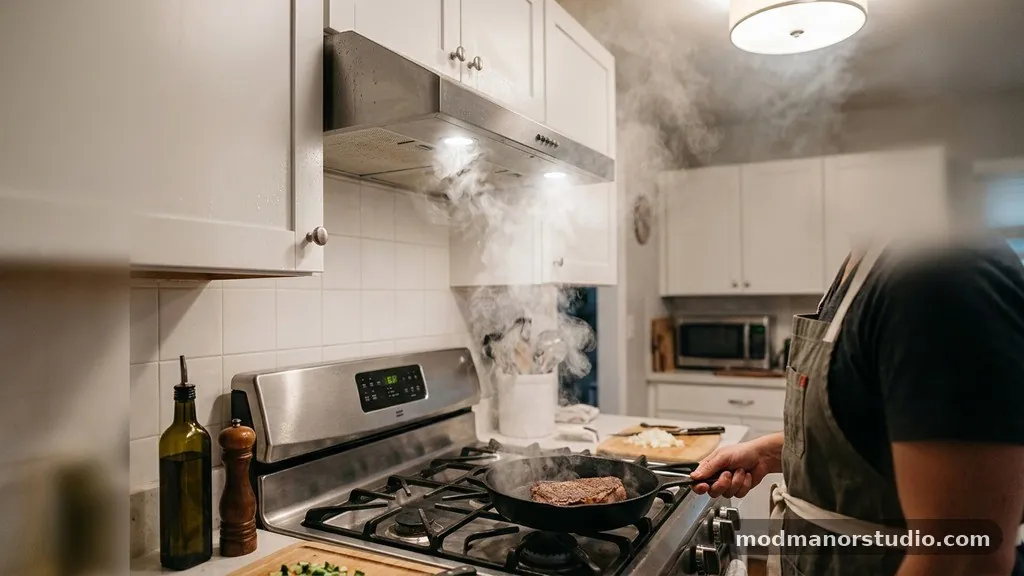
You will notice this failure most clearly during high-heat cooking tasks like searing a steak or boiling a large pot of water. Instead of being drawn directly into the vents, the steam and smoke will billow outward into the kitchen.
This happens because the air velocity at the cooktop surface decreases exponentially as distance increases. Even if your fan has a high CFM (cubic feet per minute) rating, it cannot overcome the physics of distance.
Manufacturer Specifications and Safety Standards
Every appliance comes with a specific installation manual that dictates the exact height range for safety and performance. You should always consult the National Fuel Gas Code or the manufacturer’s specific guidelines to determine the safe clearance for your model. If you mount the hood too high, you might technically be adhering to fire safety codes, but you are likely violating the performance requirements set by the manufacturer.
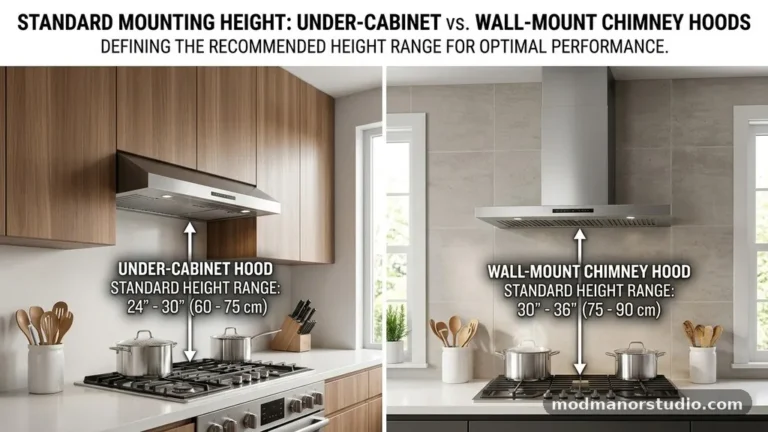
Manufacturers test their units at specific heights to ensure that grease and moisture are captured before they reach the ceiling or walls. Installing a unit at 36 or 40 inches above the cooking surface when the manual specifies 24 to 30 inches is a common mistake.
This extra gap creates a massive performance deficit. You effectively render the internal motor and filtration system inefficient by increasing the distance the air must travel to reach the filter.
Impact on Grease Accumulation
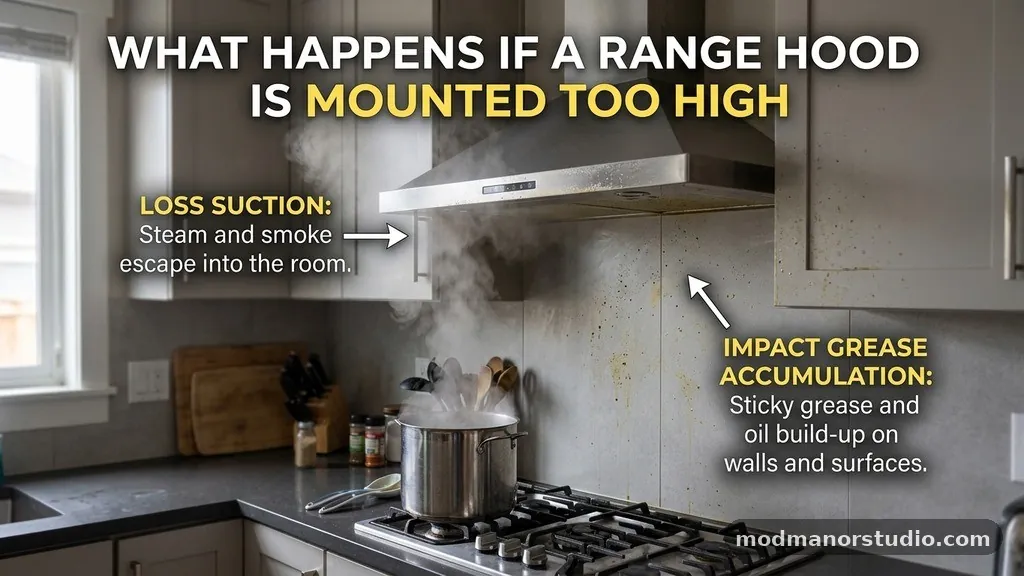
Grease is a heavy, sticky byproduct of cooking that travels on the rising air currents from your pans. When the hood is properly installed, the air velocity at the cooktop is strong enough to carry these grease particles directly into the filters.
When the hood is mounted too high, the air velocity drops, and the grease particles lose their momentum. They do not reach the filter; instead, they settle on your backsplash, upper cabinets, and ceiling.
This accumulation leads to a long-term maintenance headache. You will find yourself scrubbing sticky residues off surfaces that are far away from the stove.
Over time, this grease can harden and become difficult to remove without harsh chemical cleaners. Furthermore, this buildup is a fire hazard if it accumulates near light fixtures or electrical outlets on your kitchen wall.
Comparison of Standard Mounting Heights
To visualize how different heights impact performance, it is helpful to look at the standard clearance requirements for various types of cooking setups. Electric ranges typically allow for slightly more flexibility than gas ranges, which produce more intense heat and require stricter clearance to prevent damage to the hood’s internal components.
| Range Type | Recommended Height (Inches) | Performance Impact of Exceeding |
|---|---|---|
| Electric Cooktop | 20 to 24 inches | Significant capture loss |
| Gas Range | 24 to 30 inches | Severe grease bypass |
| Island Hood | 28 to 36 inches | High susceptibility to drafts |
The Physics of Airflow and Capture
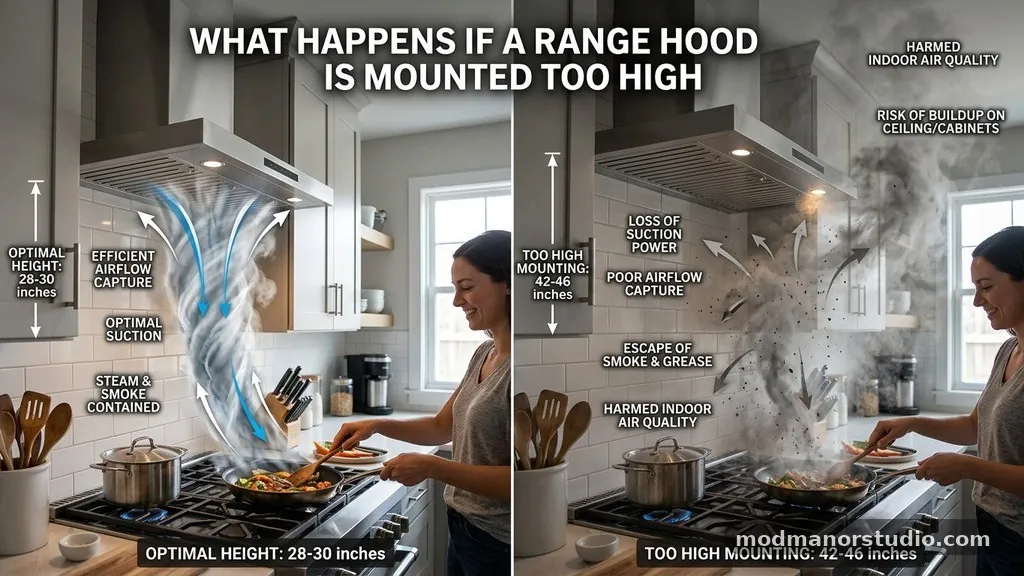
The concept of “capture efficiency” is central to how range hoods function. A hood acts like a vacuum cleaner; the closer the nozzle is to the surface being cleaned, the more powerful the suction feels.
When you raise the hood, the volume of air that the fan must move to create a vacuum increases significantly. The hood is no longer just pulling from the cooktop; it is trying to pull from the entire volume of air between the pans and the filters.
This creates a dilution effect. The smoke and steam become mixed with the ambient kitchen air before they reach the intake. Because the air is diluted, the fan cannot effectively capture the pollutants.
This is why a professional-grade hood might still perform poorly if it is mounted too high. The motor power is irrelevant if the capture area is not properly positioned to intercept the rising plume of heat.
How Drafts Affect High-Mounted Hoods
Kitchens are rarely static environments. Air currents from open windows, ceiling fans, or even the movement of people through the room can push smoke away from the stove.
A properly mounted hood minimizes the influence of these drafts by keeping the capture zone tight to the source. When a hood is mounted too high, it is much more susceptible to these stray air currents.
Even a gentle breeze from an air conditioning vent can blow a plume of smoke away from a high-mounted hood. Once the smoke is displaced, the hood’s suction is rarely strong enough to pull it back in.
This results in the “smoke lingering” phenomenon that many homeowners complain about. If your hood is mounted too high, you are essentially fighting a losing battle against the natural airflow of your home.
The Role of Hood Width
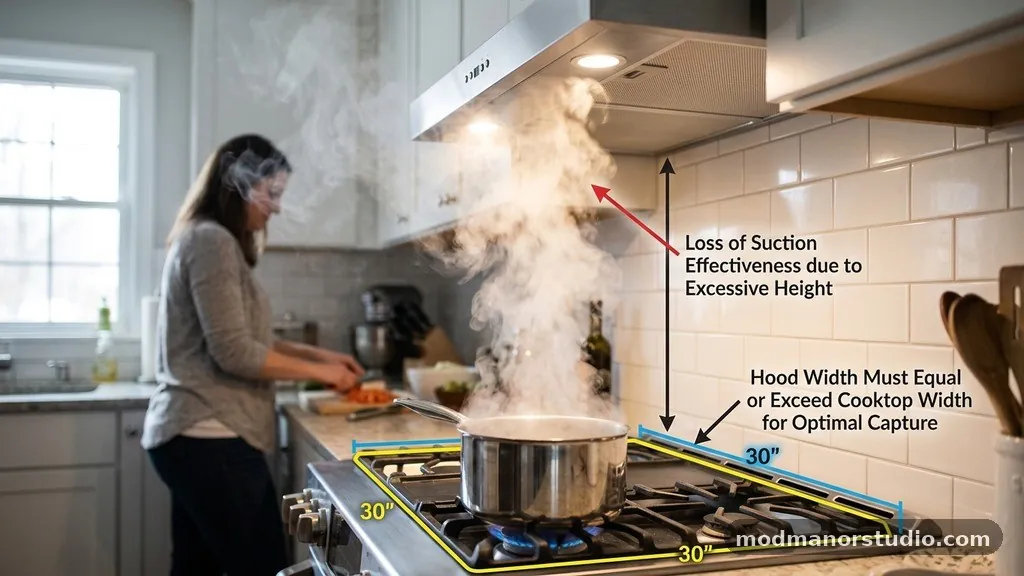
Width is another critical factor that interacts with height. A general rule of thumb is that the hood should be at least as wide as the cooking surface, and ideally slightly wider.
If you have a 30-inch range, a 30-inch hood mounted at the correct height might be sufficient. However, if that same 30-inch hood is mounted too high, it becomes even less effective.
Increasing the height requires a larger hood width to compensate for the widening plume of smoke. If you are constrained by cabinet space and cannot install a wider hood, your only option is to keep the hood at the lowest recommended height.
Deviating from this height while using a standard-width hood guarantees that you will experience performance issues. The wider the hood, the more forgiving it is of height, but it cannot fully mitigate the loss of suction caused by excessive elevation.
Energy Consumption and Motor Wear
Many homeowners believe that if they buy a more powerful hood, they can mount it higher than recommended. This is a misconception that often leads to increased energy costs and premature mechanical failure.
To compensate for the distance, you might be tempted to keep the fan on the “high” or “boost” setting at all times. This constant high-speed operation puts unnecessary strain on the blower motor.
Over time, this leads to increased wear and tear on the internal components. You will also notice a significant increase in noise levels.
Higher fan speeds are naturally louder, and if you have to use that speed for every meal to achieve basic ventilation, your kitchen becomes a noisy environment. The energy efficiency of the appliance is compromised, as you are consuming more electricity to achieve the same result as a lower-speed, properly positioned unit.
Installation Challenges and Adjustments
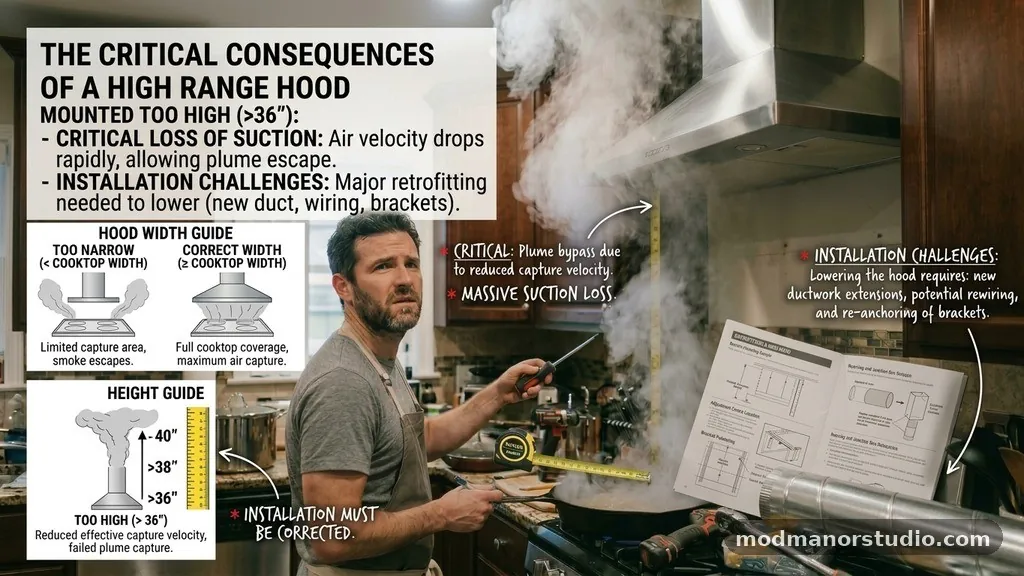
Correcting a range hood that was mounted too high is often an involved process. It may require moving the electrical outlet or the ductwork, which can be expensive if your kitchen is already finished.
Before deciding to move the hood, you should assess whether the issue is indeed height or if there is a blockage in the ducting. Sometimes, the suction is poor because the exhaust vent is clogged or the duct run is too long.
If you confirm that the height is the culprit, you have a few options for mitigation. You could install a “filler panel” or a custom chimney extension to bring the hood closer to the cooktop.
Alternatively, some homeowners choose to build a small shelf or a lower cabinet structure to house the hood at the correct height. These solutions are more cost-effective than tearing out the entire wall to move the mounting brackets.
Common Questions About Hood Mounting
How high should a range hood be mounted for optimal performance?
Generally, you should maintain a distance of 24 to 30 inches for gas ranges and 20 to 24 inches for electric ranges. Check your specific manual, as some high-BTU professional ranges require a minimum of 30 to 36 inches to prevent the hood from catching fire.
Why is my range hood not pulling enough air?
If your hood is mounted at the correct height but still fails to pull, check for a clogged filter or an obstruction in the exterior vent. Also, ensure the ductwork size matches the hood’s outlet diameter, as restricted airflow significantly reduces suction power.
Does an island hood need to be mounted differently?
Yes, island hoods are exposed on all sides, meaning they are more prone to drafts. Because they lack the support of wall cabinets, they often require a slightly different mounting height and a higher CFM rating to compensate for the loss of the “wall effect” that helps guide smoke.
Can I use a more powerful fan to compensate for a high-mounted hood?
While a higher CFM fan can pull more air, it cannot compensate for a poorly positioned capture zone. Raising the hood makes it easier for pollutants to escape into the room before they reach the intake, regardless of how much power the motor has.
What happens if I mount my hood too low?
Mounting a hood too low can be a fire hazard, especially with gas ranges, as the grease on the filters may ignite from the flames below. It can also obstruct your view of the cooking surface and make it difficult to maneuver large pots and pans.
Final Considerations for Homeowners
When you consider what happens if a range hood is mounted too high (loss of suction), it becomes clear that precise installation is non-negotiable. The physics of smoke and heat rise are unforgiving; once the air plume expands beyond the capture zone, no amount of fan power can effectively reclaim it. By adhering to the manufacturer’s height recommendations, you ensure that your kitchen remains clean, your air remains fresh, and your appliance operates at its intended efficiency.
If you find that your current setup is underperforming, verify the installation height before upgrading the motor or the entire unit. Simple adjustments or the addition of custom trim can often resolve the issues without a full renovation. Take the time to measure your current clearance and consult your manual to see if you have room for improvement.
Proper ventilation is a foundational element of a functional kitchen, and getting the height right is the first step toward a healthier home environment. If you continue to struggle with performance, reach out to a professional installer to discuss the best path forward for your specific kitchen layout.