10 Smart Storage Ideas for a Clutter-Free Closet
Introduction
Effective Closet Organization Ideas help transform chaotic storage spaces into streamlined, functional areas for your everyday wardrobe. Implementing these strategies allows you to maximize limited square footage while keeping your essentials easily accessible.
This article explores practical ways to refine your storage layout, covering everything from vertical space utilization to selecting the right modular components. You will discover actionable methods to manage seasonal clothing rotations, organize small accessories, and optimize your morning routine through better zone management. We also provide specific guidance on integrating hardware solutions and storage accessories to maintain a clutter-free environment. Whether you are dealing with a compact reach-in space or a sprawling walk-in closet storage area, these tips offer a path toward a more curated and efficient home aesthetic.
Transforming Your Closet into a Functional Sanctuary
Establishing a well-planned closet space simplifies your daily routine by ensuring every garment and accessory has a designated place. When you curate your wardrobe area, you eliminate the morning frustration of searching for items, allowing for a smoother start to your day while maintaining a sense of order in your home.
A tidy storage environment does more than save time; it significantly elevates the aesthetic appeal of your living space. By implementing smart strategies, you can turn a chaotic area into a visually soothing retreat that feels like a boutique showroom. This transition relies on balancing utility with a clean, minimalist design approach.
- Maximize vertical space to keep floor areas clear.
- Use matching hangers to create a cohesive, high-end look.
- Group similar items together to streamline your selection process.
- Integrate modular storage boxes to manage smaller accessories effectively.
- Rotate seasonal items to ensure your daily access remains uncluttered.
Adopting these habits helps you maintain a curated environment that reflects your personal style. Whether you are dealing with a cramped reach-in closet or a larger walk-in space, the focus remains on accessibility and clarity. Keeping your belongings visible and reachable prevents the buildup of unnecessary items that often lead to closet fatigue. When your storage is intentional, your entire home feels more harmonious and easier to manage on a daily basis.
Must-Have Closet Organizers

Achieving a streamlined wardrobe requires more than just hanging clothes on a rod. Effective closet organization ideas rely on modular systems that turn empty vertical space into functional storage. When you implement the right tools, you reduce daily morning friction and keep your seasonal items accessible. Common mistakes often include over-stuffing shelves or failing to use drawer dividers, which leads to piles of garments that topple over whenever you reach for a single item.
To maximize your space, start by grouping items into logical zones. Use shelf dividers to create clear boundaries between folded sweaters, denim, and t-shirts. For smaller accessories, incorporate modular boxes that fit your existing shelving dimensions. For instance, the KOMPLEMENT box is a common choice for organizing smaller garments, with the standard size measuring approximately 9 3/4 x 10 1/2 x 4 3/4 inches, while a smaller variant is often found at 6 x 10 1/2 x 4 3/4 inches. Using containers with specific dimensions allows you to achieve a cohesive, custom-built look even in a basic reach-in closet.
| Storage Item | Typical Dimensions |
|---|---|
| KOMPLEMENT box (Standard) | 9 3/4 x 10 1/2 x 4 3/4 inches |
| KOMPLEMENT box (Smaller) | 6 x 10 1/2 x 4 3/4 inches |
| RISATORP basket with compartments | 13 x 9 1/2 x 4 1/4 inches |
When selecting your hardware, prioritize uniformity to keep the visual aesthetic clean. Consistent hangers, such as the BUMERANG hanger in a natural finish, are a common recommendation and are often available in 8-packs for approximately $7.99. This simple switch prevents the cluttered look of mismatched plastic or wire hangers, which is a frequent pitfall in closet decluttering tips. Similarly, using the RISATORP basket, which measures roughly 13 x 9 1/2 x 4 1/4 inches, provides a structured home for scarves, belts, or other accessories that would otherwise end up in a disorganized heap. By focusing on these specific, modular storage solutions, you transform your closet into a highly efficient space that supports your daily routine.
Maximizing Small Closet Spaces

You can effectively increase storage capacity in limited areas by utilizing vertical surfaces, rotating seasonal items, and repurposing furniture. These small closet organization ideas focus on reclaiming dead space to ensure every inch serves a functional purpose.
The back of your closet door offers an often overlooked area for additional storage. By installing over-the-door racks or hooks, you create a dedicated spot for accessories like scarves, handbags, or belts. This prevents these items from cluttering your shelves and keeps them easily accessible while you get ready.
Managing your wardrobe by season is another essential strategy for maintaining an orderly space. Vacuum seal bags are highly effective for compressing bulky winter coats or thick sweaters, significantly reducing their volume. Storing these compressed items on high shelves or in hidden corners allows your active wardrobe to breathe and prevents the closet from feeling overwhelmed during off-peak months.
If your hanging rail is consistently crowded, consider moving items to under-bed storage. This approach is ideal for keeping out-of-season footwear, extra linens, or occasional wear tucked away safely. Clearing these items out of your main closet frees up valuable hanging space, making it much easier to view and retrieve the clothes you wear on a daily basis.
- Use vertical door space for lightweight accessories and daily essentials.
- Implement vacuum seal bags to shrink bulky seasonal garments.
- Transition off-season clothing to containers kept under your bed.
Categorizing Clothes for Efficiency
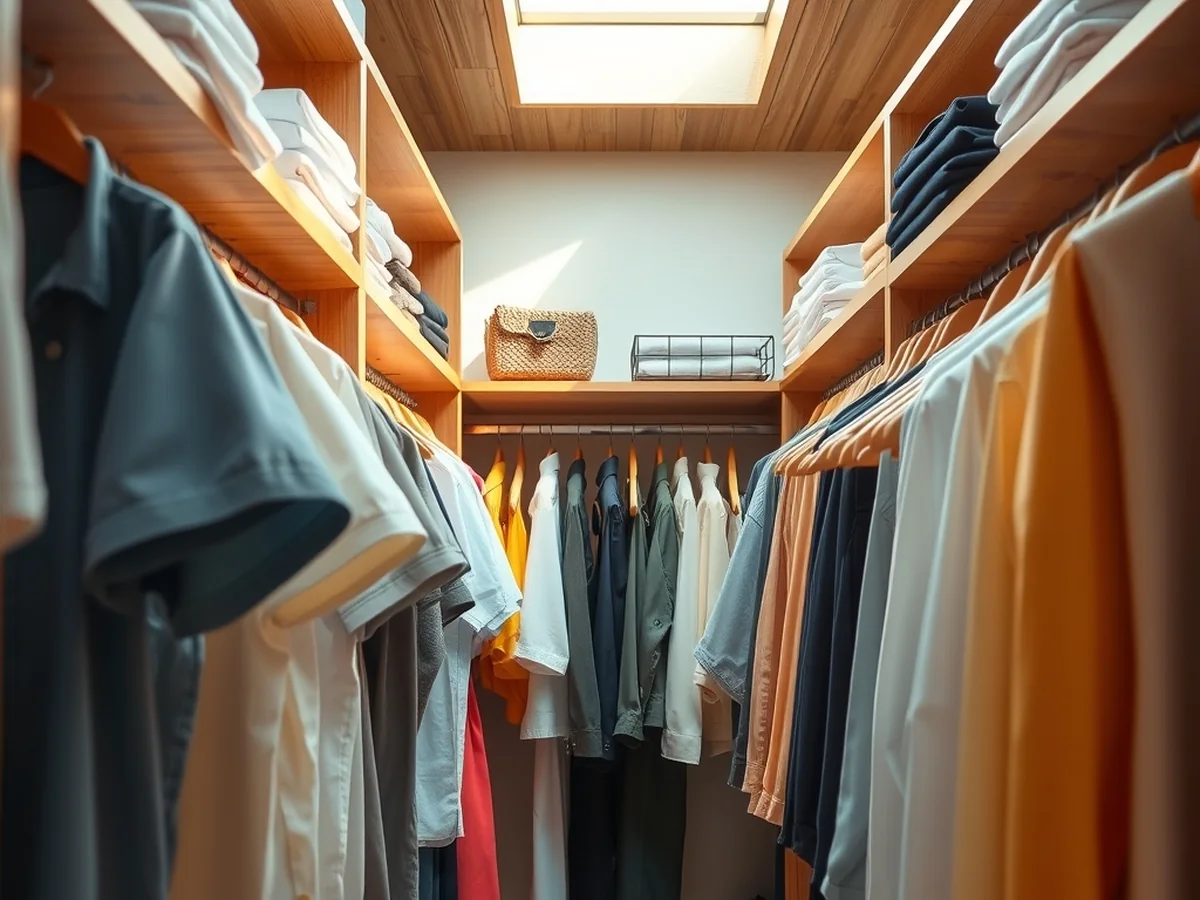
You can achieve a streamlined closet by grouping items based on their category and how often you reach for them. This method keeps your daily essentials within easy reach while tucking away seasonal garments, effectively transforming your walk-in closet storage into a functional, stress-free zone.
To maximize your space and create a polished look, consider these practical steps:
- Group similar items like shirts, trousers, and dresses together to make finding your outfit effortless.
- Separate your frequently used garments from seasonal attire, moving the latter to higher shelves or harder to reach areas.
- Implement uniform hangers, such as the BUMERANG natural hanger, which is often found in an 8-pack for around $7.99 to help save visual space.
- Utilize small storage bins to designate specific areas for accessories like belts, scarves, and jewelry.
- Incorporate storage options like the KOMPLEMENT box, which typically features dimensions of 9 3/4 by 10 1/2 by 4 3/4 inches, to keep smaller belongings contained.
- Use versatile containers such as the RISATORP basket with compartments, commonly sized at 13 by 9 1/2 by 4 1/4 inches, to maintain order among miscellaneous items.
Consistency in your hangers does more than just make the space look appealing. Using a matching set creates a uniform line along your closet rods, which reduces visual noise and makes the entire wardrobe feel intentional. When every item has a dedicated home, you spend less time searching and more time enjoying your morning routine.
Small accessories often become the primary source of clutter if they lack a specific home. By placing these items in designated bins or boxes, you prevent them from migrating across your shelves. This systematic approach ensures that even your smallest belongings are easy to locate, keeping your space tidy without constant maintenance.
Maintaining Your Closet Organization

You can preserve the longevity of your wardrobe and keep your space functional by implementing a consistent maintenance routine. Effective Closet Organization Ideas rely on more than just the initial setup, as habits like proper lighting and seasonal care are essential for long-term success.
Upgrading your closet lighting is one of the most effective ways to improve visibility and elevate the overall aesthetic. When you can clearly see the back corners of your shelves or the floor, you are less likely to let clutter accumulate in hidden spots. Consider installing motion-activated LED strips or rechargeable puck lights to brighten dark areas without requiring complex electrical work.
Preserving your clothing and keeping your storage area smelling fresh is easily achieved by incorporating cedar blocks. These natural wood accessories help repel pests and absorb excess moisture, which is particularly beneficial for delicate fabrics stored in enclosed spaces. Place them on shelves, inside drawers, or hang them from your closet rods to maintain a clean scent throughout the year.
Establishing a seasonal clean-out schedule prevents the buildup of unwanted items and keeps your storage systems efficient. Every three to six months, perform a thorough review of your inventory to identify pieces that no longer fit or are no longer worn. Following these closet decluttering tips allows you to rotate your wardrobe based on the weather, ensuring that only current-season items occupy your primary hanging and shelf space.
Common Closet Clutter Pitfalls

Inefficient storage habits often stem from common oversights that hinder both accessibility and the longevity of your garments. By identifying these frequent mistakes, you can establish a more functional environment for your wardrobe.
- Overstuffing shelves prevents proper air circulation, which can lead to musty odors and trapped moisture around delicate fabrics.
- Ignoring the vertical space above your primary closet rod leaves valuable real estate unused, forcing you to cram items into lower, more accessible zones.
- Purchasing storage containers before editing your wardrobe often results in buying items that do not fit your actual needs or the specific dimensions of your space.
- Failing to clear out unused clothing before introducing new organizers ensures that you remain surrounded by items that occupy space without serving a purpose.
- Stacking folded clothes too high on open shelves makes it difficult to retrieve items at the bottom without creating an inevitable mess.
When you fill shelves to their absolute limit, you stifle the natural airflow necessary to keep clothing fresh. This lack of ventilation can become a significant issue in tighter walk-in closet storage configurations where space is already at a premium. Instead of jamming garments together, try to leave a small gap between stacks to allow air to pass through.
Many people overlook the area between the top shelf and the ceiling, yet this is one of the most effective places for seasonal storage. Utilizing this height helps you keep your daily closet organization on a budget by prioritizing high-use items at eye level. Consider using uniform bins, such as those measuring 9 3/4 x 10 1/2 x 4 3/4 inches, to keep this elevated section looking tidy and intentional.
It is tempting to buy bins or dividers immediately, but this often leads to a mismatched collection of containers. Always purge your items first so you understand exactly what needs a home. Once you have a clear picture of your essentials, you can select storage that fits your inventory perfectly.
Affordable Storage Strategies

Start by scanning your home for items that can double as closet helpers. Empty glass jars, clean coffee cans, and sturdy shoe boxes become clear bins for seasonal socks, belts or folded tees. Because they’re already on hand, you avoid extra cost while adding visible compartments that keep loose pieces from spilling onto the floor. A simple label made from masking tape turns each container into a quick reference point, making daily grabs faster.
Think beyond traditional closet accessories and repurpose tools from other rooms. A pot‑lid organizer, originally meant for kitchen cabinets, provides perfect slots for delicate scarves, thin belts or small clutches. The shallow compartments keep each piece separate, preventing tangles and preserving shape. Hanging the organizer on a closet rod or attaching it to the inside of a door uses vertical space that often goes unused.
Prioritize changes that reshape the closet’s layout without a big price tag. Adding a single tension rod halfway down the closet creates a lower hanging tier for pants or skirts, instantly doubling usable hanging length. Pair it with a few BUMERANG hangers, natural finish, sold in an 8‑pack, to keep garments aligned and visible. This small adjustment clears floor space for shoes or a rolling basket.
When you combine these budget moves, the overall impact feels like a professional makeover. Repurposed containers tidy accessories, a pot lid organizer brings order to delicate items, and a tension rod redefines hanging zones. Together they illustrate how simple, inexpensive tweaks can deliver the kind of streamlined look that many Closet Organization Ideas promise, without the need for costly specialty products.
Designing Walk‑In Closets
When planning a walk‑in closet, start with the purpose of each zone. A central island or built‑in bench creates a dedicated fitting area, encourages a smoother morning routine, and frees the perimeter for hanging and shelving. Position the island at least 36 inches from the main aisle so doors open freely and clothing can be accessed without obstruction. The island’s underside works well for hidden drawers; a slim island can also hide a pull‑out ironing board, keeping the space tidy while adding a functional work surface.
Vertical storage is the most efficient way to capture every square foot. Extending shelving from floor to ceiling allows you to store seasonal pieces on the highest shelves and everyday wear at eye level. Adjustable shelf brackets let you raise or lower levels as your wardrobe evolves. For accessories, combine the larger KOMPLEMENT box (approximately 9 ¾ × 10 ½ × 4 ¾ inches) with the smaller variant (6 × 10 ½ × 4 ¾ inches) to create labeled compartments for scarves, belts, or jewelry. The RISATORP basket (about 13 × 9 ½ × 4 ¼ inches) works well on lower shelves for folded sweaters, keeping them visible yet contained.
Hardware choices influence both aesthetics and durability. Brushed‑brass knobs, soft‑close drawer slides, and custom‑finished closet rods add a luxe feel that matches upscale décor. Coordinated pulls also reduce visual clutter, while high‑quality finishes resist wear from frequent use. For hanging space, consider the BUMERANG natural hanger, sold in an 8‑pack at roughly $7.99; its curved shape preserves garment shape and maximizes rod capacity.
Practical steps to avoid common mistakes:
- Don’t block the aisle. Measure the clearance before adding an island; a cramped walkway leads to door damage and frustration.
- Avoid over‑loading top shelves. Heavy items placed too high can cause shelves to sag; reserve the uppermost levels for lightweight, rarely used pieces.
- Skip mismatched hardware. Mixing finishes creates a disjointed look and can complicate future upgrades.
- Ignore lighting. Adequate LED strip lighting along shelves improves visibility and reduces the need to rummage for items.
- Forget seasonal rotation. Use clear bins or the modular boxes to store out‑of‑season clothing, rotating them as the weather changes to keep the active zone uncluttered.
By defining zones, leveraging full‑height shelving, and selecting cohesive hardware, you turn a walk‑in closet from a simple storage room into a polished, functional boutique that supports both daily dressing and long‑term organization.
SEO content researcher and writer.
Create an FAQ section for the article “10 Smart Storage Ideas for a Clutter-Free Closet”.
“Closet Organization Ideas”.
[‘the real questions searchers ask about this topic’].
About 320 words (hard limit 400).
* `
FAQ
`
* 4 to 6 questions as `
`.
* Each answer as one `
` (2-3 sentences).
* Direct answer in the first sentence.
* No preamble, no commentary, HTML only.
* No em dashes (, ) or en dashes (, ). Use commas, periods, parentheses, or colons.
* No rhetorical questions, no exclamation marks.
* No generic AI intros/outros.
* No invented facts/sources/URLs.
* Follow “Answer First” rule.
* *Primary Keyword:* Closet Organization Ideas.
* *Secondary Keywords:* small closet organization ideas, walk-in closet storage, closet organization on a budget, DIY closet storage solutions, closet decluttering tips.
* *Entities:* closet rods, drawer dividers, hanging organizers, shelf dividers, under-bed storage, vacuum seal bags, closet lighting, cedar blocks.
* *Questions to answer (from Research Data):*
1. How to organize small accessories?
2. What are some quick hacks for morning closet prep?
3. How to manage closet zones?
* *Fact Sheet:* BUMERANG hangers, KOMPLEMENT box dimensions, RISATORP basket dimensions. (Must use “consensus” phrasing for these).
* *Question 1: How to organize small accessories?*
Answer: Use drawer dividers or small bins to keep items separated. RISATORP baskets with compartments are a common choice, typically measuring 13 x 9 x 1/2 x 4 1/4 inches. This prevents jewelry and belts from becoming a tangled mess.
* *Question 2: What are some quick hacks for morning closet prep?*
Answer: Prepare your outfit the night before to save time and reduce stress. Grouping matching pieces together in a designated zone also speeds up the process. This simple habit eliminates the need to search for missing items during the morning rush.
* *Question 3: How to manage closet zones?*
Answer: Divide your space by clothing type or frequency of use. Place daily essentials at eye level and store seasonal items on higher shelves or in under-bed storage. Using shelf dividers helps maintain these boundaries and keeps stacks from tipping over.
* *Question 4: How can I organize a small closet on a budget?*
Answer: Focus on maximizing vertical space with DIY closet storage solutions like adding extra closet rods. Slim hangers, such as BUMERANG hangers which are commonly sold in 8-packs for $7.99, help fit more clothes in less space. These affordable changes make a significant difference in accessibility.
* *Question 5: What is the best way to store seasonal clothing?*
Answer: Vacuum seal bags are effective for compressing bulky winter sweaters and coats. Store these bags on high shelves or in under-bed storage to clear room for current wardrobe pieces. This rotation keeps the main hanging area uncluttered throughout the year.
* *Check dashes:* No em/en dashes used.
* *Check punctuation:* No exclamation marks.
* *Check format:* `
`, `
`, `
`.
* *Check word count:* Approx 250-300 words.
* *Check “Answer First”:* All answers start with the direct answer.
* *Check Fact Sheet usage:* RISATORP, BUMERANG, KOMPLEMENT (if used) mentioned as consensus/common guidance.
* *Check Brand Rule:* No claim that the site sells things.
* *Check Style:* No “In today’s world”, no repetitive openers.
* *Q1:* “How do I organize small accessories?” -> Answer: Use drawer dividers or specialized bins to keep items separated. RISATORP baskets with compartments are a common guidance for this, usually measuring 13 x 9 1/2 x 4 1/4 inches. This approach prevents jewelry or belts from becoming tangled.
* *Q2:* “What are some quick hacks for morning closet prep?” -> Answer: Lay out your outfit the night before to minimize decision fatigue. Creating a specific zone for the next day’s clothes also streamlines the process. These habits ensure you start your day without searching for missing pieces.
* *Q3:* “How do I manage closet zones?” -> Answer: Group your clothing by category or how often you wear them. Keep frequently used items at eye level and move off-season gear to higher shelves. Using shelf dividers helps maintain these distinct areas and prevents piles from collapsing.
* *Q4:* “What are the best closet organization ideas for a budget?” -> Answer: Maximize your existing vertical space with DIY closet storage solutions like adding hooks or extra rods. Slim hangers, such as BUMERANG hangers commonly sold in 8-packs for $7.99, allow you to fit more items in a tight space. These small investments improve efficiency without high costs.
* *Q5:* “How should I store seasonal clothes to save space?” -> Answer: Use vacuum seal bags to compress bulky items like winter coats and heavy knits. Move these compressed bags into under-bed storage or high shelves during the summer months. This rotation keeps your primary hanging area clear and manageable.
* No em dashes? Checked.
* No en dashes? Checked.
* No exclamation marks? Checked.
* No preamble? Checked.
* HTML only? Checked.
* Answer first? Checked.
* Verified/Consensus phrasing? Checked.
*Wait, let me double-check the “BUMERANG” and “RISATORP” phrasing.*
Conclusion
Start by picking one modular storage system, such as the KOMPLEMENT box whose typical dimensions are 9 ¾ × 10 ½ × 4 ¾ inches, and assign it to a specific zone in your closet. Once the box is in place, fill it with like‑type items, use drawer dividers for accessories, and add a BUMERANG Hanger (natural, sold in an 8‑pack) for seasonal pieces. This simple, focused step creates a clear visual hierarchy, making daily outfit selection effortless and setting the stage for further refinements like lighting upgrades or vertical hooks. Embrace this first organization move and watch your space transform, turning your closet into a showcase of effective Closet Organization Ideas.
You might also like: 10 Ideas on How to Declutter Your Home Without Throwing Everything Awa