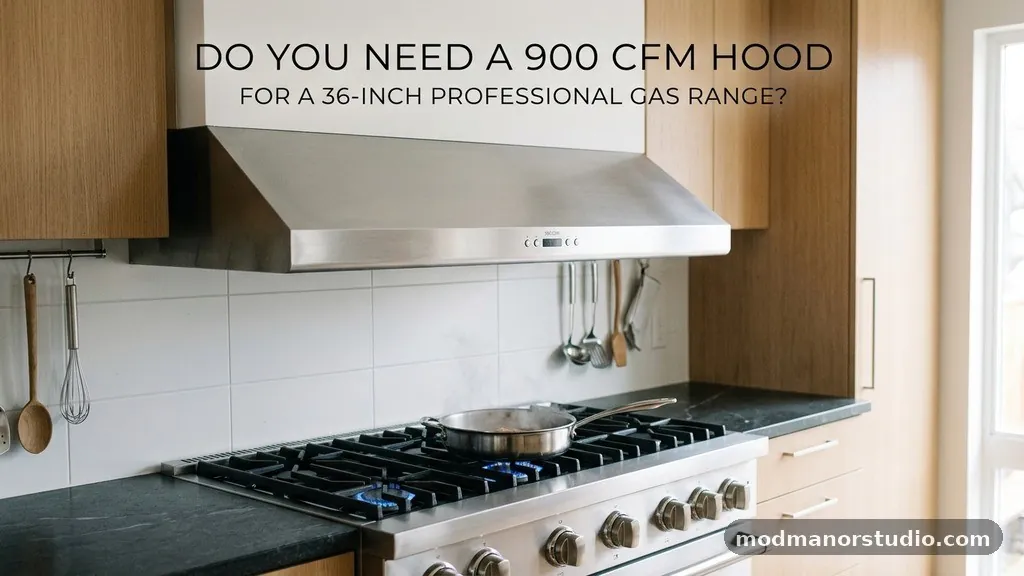
Do You Need a 900 CFM Hood for a 36-Inch Professional Gas Range?
Deciding whether you need a 900 CFM hood for a 36-inch professional gas range often feels like a balancing act between safety, performance, and building codes. Many homeowners assume that more power is always better, but kitchen ventilation is a technical subject involving airflow dynamics and home infrastructure.
If you are currently evaluating your kitchen renovation or appliance upgrade, you might be wondering if a 900 CFM hood for a 36-inch professional gas range is truly necessary for your specific cooking habits. This article explores the math, the regulations, and the practical considerations you need to understand to ensure your kitchen remains a comfortable, smoke-free space without installing unnecessary industrial-grade equipment.
The Direct Answer
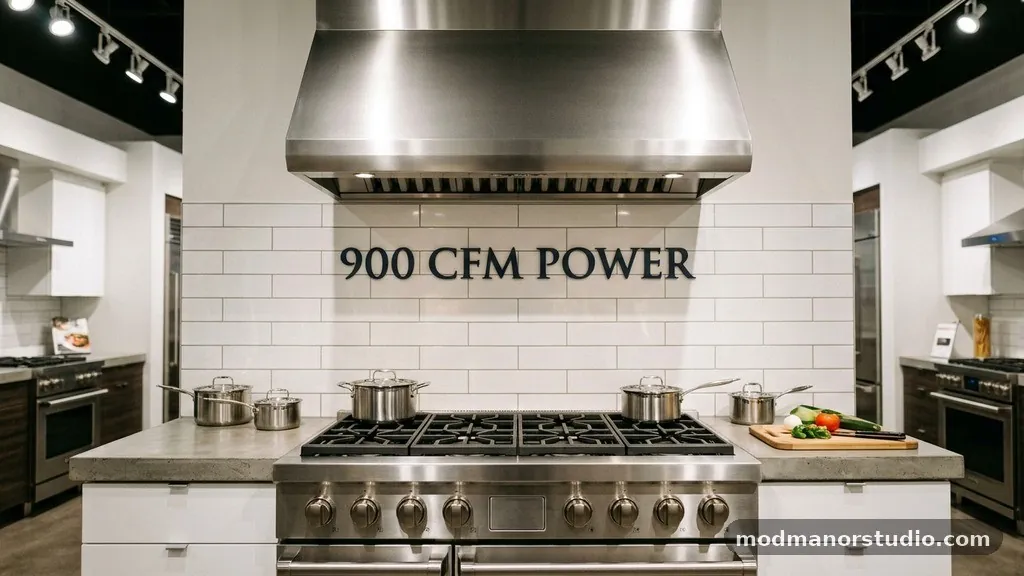
In short, you do not always need a 900 CFM hood for a 36-inch professional gas range, but you likely need more than a standard entry-level unit. Most residential 36-inch professional ranges feature burners that produce between 15,000 and 22,000 BTUs each. If your range has a total output exceeding 60,000 or 70,000 BTUs, a higher-capacity hood becomes essential.
While 900 CFM is the industry “gold standard” for professional-style setups, many households find that 600 CFM is sufficient for daily cooking. The decision ultimately rests on your specific burner output, your frequency of high-heat searing, and the length of your ductwork.
Understanding the Rule of Thumb
The most common method for calculating required airflow involves the “100 CFM per 10,000 BTU” rule. If your range produces 60,000 BTUs, a hood capable of 600 CFM is mathematically recommended.
For a 36-inch professional range, you often have four to six burners that can easily push your total BTU output toward 80,000. In these cases, a 600 CFM hood might struggle to capture all the grease and smoke generated during intense cooking sessions.
However, the raw math doesn’t account for your actual cooking style. If you rarely use all burners at once or primarily focus on low-heat simmering, you will not be pushing your range to its maximum BTU capacity.
If your cooking style involves frequent stir-frying, blackening, or searing steaks, you are creating significant heat and particulate matter. That is when the higher power of a 900 CFM unit becomes a practical asset rather than an overkill luxury.
The Hidden Impact of Ductwork
Many homeowners underestimate how much their ductwork restricts airflow. A hood rated for 900 CFM at the blower will rarely perform at that level once it is connected to your home’s ventilation system.
Every bend, elbow, and transition in your ductwork creates static pressure that forces the motor to work harder and move less air. If you have a long, winding duct run to the exterior, your 900 CFM hood might effectively function as a 600 CFM unit.
When planning your installation, aim for the shortest, straightest path to the outside. Using smooth, rigid ducting rather than flexible, corrugated pipe is critical for maintaining performance.
If your ducting is restricted by tight spaces or building architecture, you might find that you need the “extra” power of a 900 CFM unit just to compensate for the friction loss. A professional installer can often measure the static pressure to determine if your ventilation design is strangling your hood’s capacity.
Why Makeup Air Matters
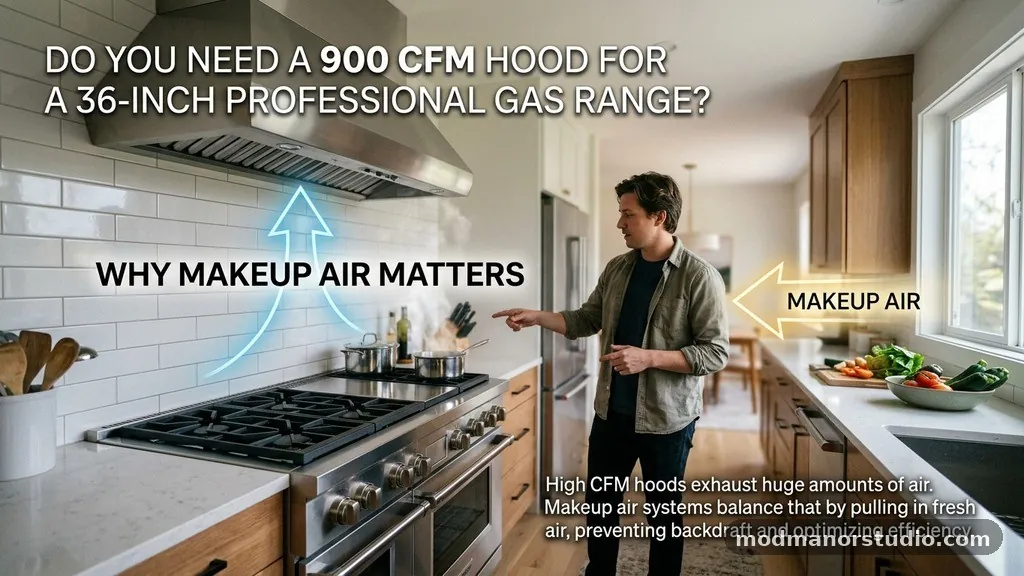
If you choose a high-capacity hood, you must address the issue of makeup air. A 900 CFM hood is powerful enough to create significant negative pressure inside a tightly sealed modern home.
If the air being exhausted by the hood isn’t replaced by an equal amount of fresh air, the system will struggle to draw properly. This can lead to smoke lingering in the kitchen, backdrafting of other gas appliances, and even damage to the hood motor.
Many local building departments now require a dedicated makeup air system for any kitchen exhaust hood exceeding 400 CFM. This involves installing an intake system that brings fresh, tempered air into the kitchen to balance the pressure.
Before you commit to a high-powered 900 CFM unit, check your local municipal codes regarding makeup air requirements. Ignoring this can lead to failed inspections or, more importantly, a dangerous living environment where gas fumes from your water heater or furnace are pulled back into the living space.
Cooking Style and Heat Management
Your personal approach to the stove is the biggest variable in this decision. If you consider yourself a serious home chef who frequently hosts large dinners, you are likely utilizing multiple burners at high settings.
High-heat cooking creates massive amounts of moisture and grease that must be evacuated quickly. In these scenarios, a 900 CFM hood provides the necessary “capture area” to prevent grease from coating your cabinetry and walls.
| Cooking Intensity | Typical BTU Output | Recommended CFM |
|---|---|---|
| Light/Occasional | 30,000 – 45,000 | 400 – 600 |
| Moderate/Daily | 45,000 – 65,000 | 600 |
| Heavy/Professional | 65,000 – 90,000+ | 900+ |
If you look at the table above, you can see how usage dictates the need for power. If you rarely sear meat or deep-fry foods, a 900 CFM unit will likely run on its lowest setting 90% of the time.
While there is nothing wrong with having extra capacity, you must weigh the upfront cost of the unit and the potential complexity of the installation against your actual needs. A 600 CFM hood is often quieter and more energy-efficient for the average home cook.
Noise Levels and Motor Size

A common complaint regarding 900 CFM hoods is the noise level. Because these units require more powerful motors and move a higher volume of air, they are inherently louder than their lower-CFM counterparts.
If your kitchen is open to your living or dining area, the sound of a hood running on high can make conversation impossible. Many manufacturers attempt to mitigate this by using internal or external blowers to move the noise further away from the cooking surface.
For those who prioritize a quiet kitchen, an external blower mounted on the roof or an exterior wall is often the best solution. This keeps the motor noise outside, allowing you to have the high-capacity performance of a 900 CFM system without the interior roar.
If you decide to go with a high-powered hood, look for units with variable speed controls. Being able to set the fan to a low, quiet hum for boiling water and a powerful, high-velocity setting for searing is the best of both worlds.
Island vs. Wall-Mounted Installations
The location of your range significantly alters the physics of smoke capture. A wall-mounted hood benefits from the “backsplash effect,” where the wall helps guide smoke and grease into the filters.
An island installation, however, is much more difficult to vent effectively because there are no walls to contain the air currents. If your 36-inch range is located on an island, you almost certainly need a more powerful hood.
In an island setup, cross-drafts from open windows, ceiling fans, or even people walking by can easily disrupt the rising heat. A 900 CFM hood is often the standard recommendation for island-mounted ranges because it provides a stronger “draw” to overcome these environmental factors.
If you are putting your range in an island, do not be tempted to skimp on the hood’s power. The lack of containment means you need every bit of CFM you can get to clear the air.
Important Safety Considerations
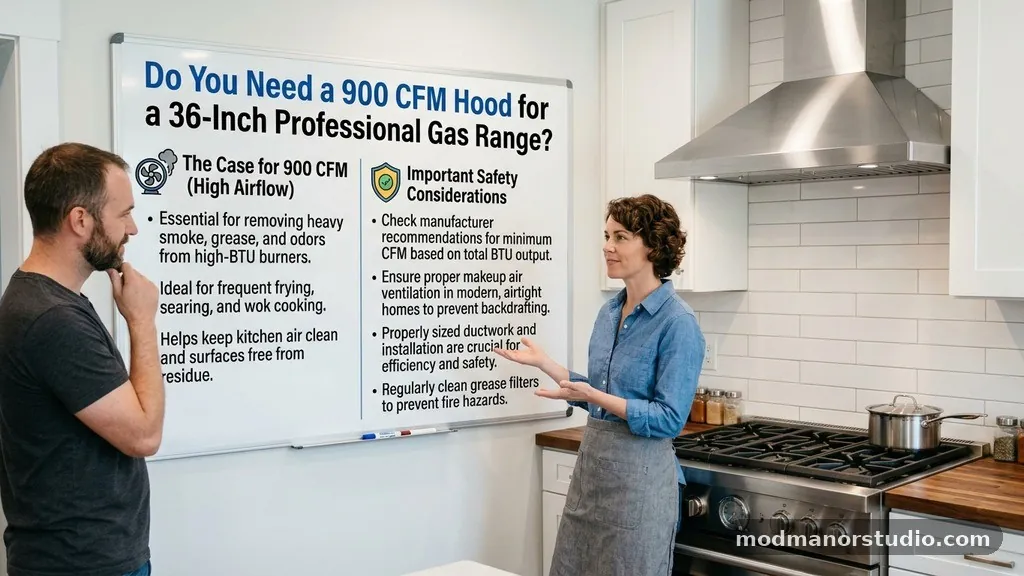
Ventilation is not just about comfort; it is about fire safety and air quality. A high-performing range hood captures airborne grease that would otherwise settle on your ceiling, light fixtures, and curtains.
Over time, this grease accumulation becomes a significant fire hazard. A properly sized hood ensures that the vast majority of this grease is trapped in the baffle filters before it enters the ductwork.
You can learn more about the importance of proper kitchen ventilation standards from official resources such as the International Code Council, which provides guidelines for residential building safety. Ensure your hood is wide enough to cover the entire cooking surface, ideally extending at least three inches beyond the burners on both sides.
A 36-inch range should ideally have a 42-inch hood to ensure proper edge-to-edge capture. Even a 900 CFM motor will fail to clear the air if the hood canopy is too small to cover the burners.
Maintenance and Filter Efficiency
Maintaining a high-powered hood is essential for it to remain effective. A 900 CFM hood will pull a significant amount of grease through its filters, which can quickly clog the mesh or baffles if they aren’t cleaned regularly.
Most professional-style hoods use stainless steel baffle filters that are dishwasher safe. If you don’t clean these filters every few weeks, the restriction will significantly reduce the actual airflow, rendering your high-capacity motor ineffective.
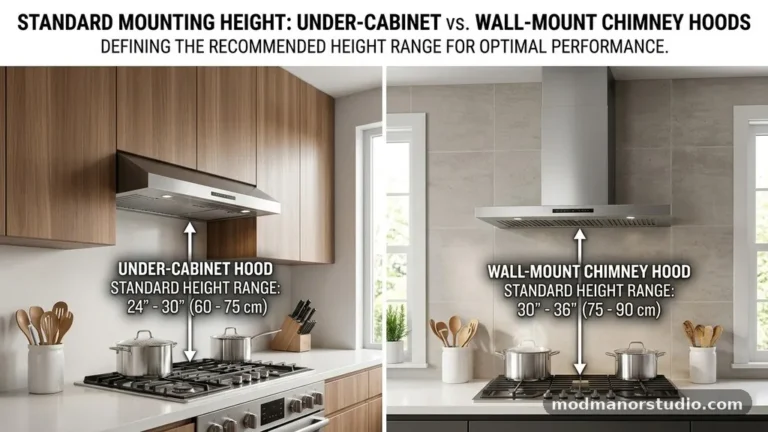
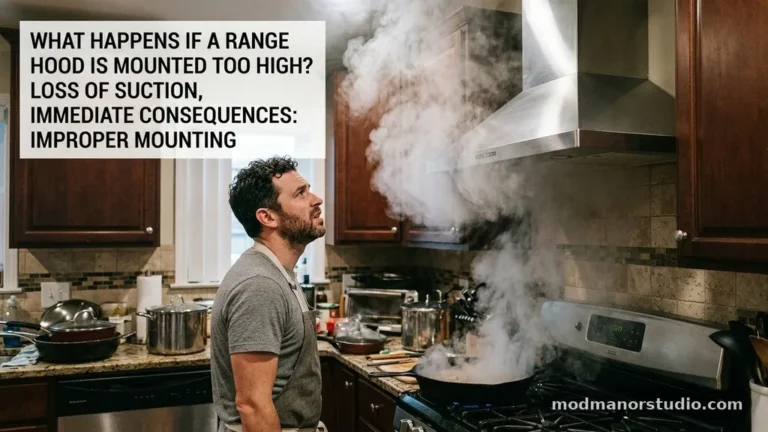
Consider the layout of your kitchen when choosing your hood style. If you choose a tall chimney hood, ensure it is installed at the manufacturer’s recommended height. If the hood is too high, it won’t capture the smoke effectively, regardless of the CFM rating.
If it is too low, you risk damaging the hood or creating a fire hazard. Always follow the installation manual’s height requirements to ensure the system works as designed.
Common Questions
Is a 900 CFM hood too loud for a small kitchen?
Yes, it can be. In a small, enclosed kitchen, the sound of a 900 CFM blower on high can be overwhelming. If you have a small space, look for a hood with a high-quality motor that offers a very quiet low-speed setting, or consider an external blower.
Can I install a 900 CFM hood without makeup air?
You might physically be able to install it, but it is often against local building codes. Without makeup air, you risk negative pressure, which can cause your pilot lights to go out or pull hazardous combustion gases into your home from other gas appliances.
Does the width of the hood matter more than the CFM?
Both are equally important. A high-CFM hood that is too narrow will miss the smoke and grease from the outer burners of your 36-inch range. A wider hood with moderate CFM is often more effective than a narrow hood with excessive CFM.
What happens if I use a 900 CFM hood on a lower setting?
Nothing negative happens; in fact, it is often better for the longevity of the motor. Running a high-capacity hood on a lower setting reduces noise and energy consumption while still providing more than enough power for everyday cooking.
Are baffle filters better than mesh filters?
For professional-style ranges, baffle filters are superior. They are designed to trap grease more efficiently and are generally easier to clean in a dishwasher, which is essential for high-heat, high-output cooking.
Summary of Considerations
Choosing the right ventilation for your kitchen is a technical decision that balances power with the realities of your home’s infrastructure. While a 900 CFM hood is a fantastic tool for those who frequently push their 36-inch range to its limits, it is not a one-size-fits-all requirement for every homeowner. By carefully considering your specific cooking habits, the layout of your kitchen, and the necessity of a makeup air system, you can select the right balance of performance and comfort.
Whether you settle on a high-capacity unit or a more modest 600 CFM model, focus on proper duct design and regular maintenance to ensure your kitchen stays clean and safe. If you still have doubts, consult with a local HVAC professional who can evaluate your specific kitchen setup and provide a tailored recommendation that respects both your cooking style and your home’s unique constraints.