What Is the Minimum Height for a Range Hood Above a Gas Stove?
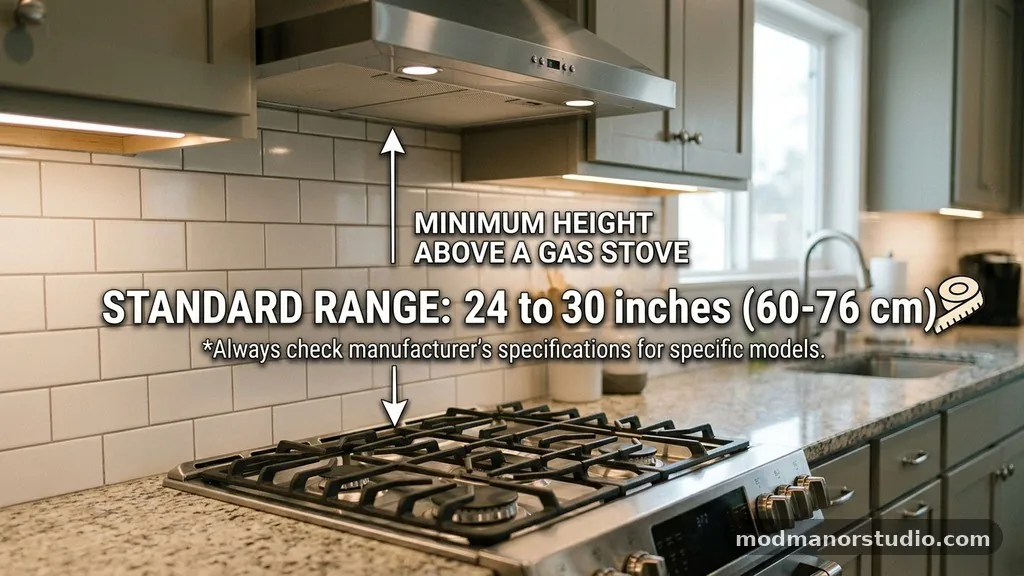
Determining the minimum height for a range hood above a gas stove is a critical step in kitchen design that balances fire safety with ventilation performance. Most manufacturers and building codes mandate a gap of at least 30 inches between the cooking surface and the bottom of the hood to prevent grease fires and ensure the unit functions effectively.
Installing a ventilation system too low exposes the appliance to excessive heat, while mounting it too high allows smoke and grease to bypass the intake entirely. Understanding these spatial requirements helps homeowners maintain a safe, functional kitchen environment that complies with local standards and protects their cabinetry from long-term damage.
Standard Requirements for Gas Stoves
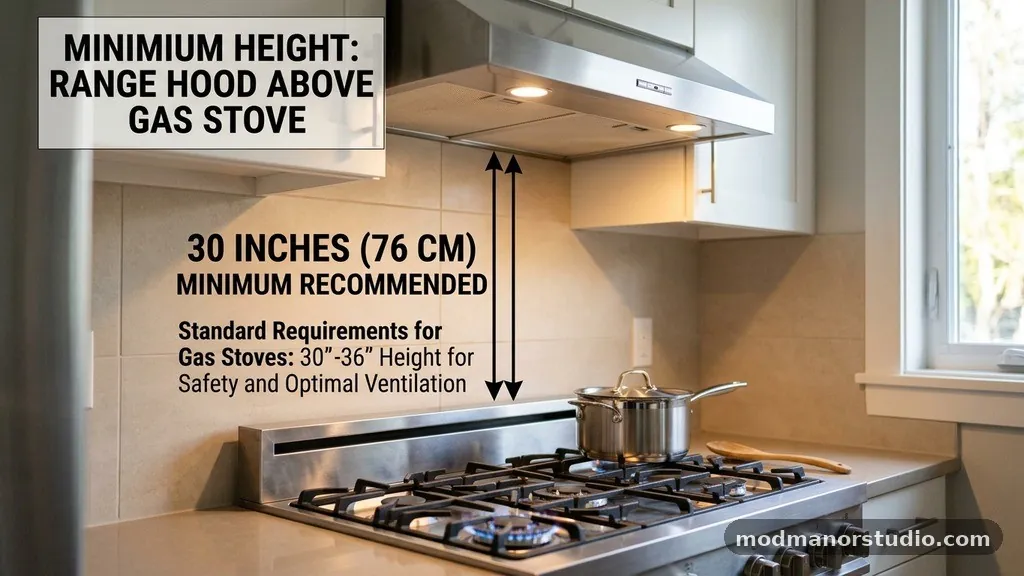
The industry standard for the minimum height for a range hood above a gas stove is typically 30 inches. This measurement is taken from the top of the burner grates to the lowest edge of the hood. Gas ranges produce significantly more heat and open flame than electric or induction cooktops, which is why they require a larger clearance.
If your range hood is mounted too low, the intense heat from the gas burners can damage the internal components of the ventilation system. Over time, plastic parts may melt or warp, and the finish of the hood could become discolored from direct exposure to heat. Furthermore, fire safety officials emphasize this distance to ensure that grease accumulated inside the filter does not reach its ignition point.
Always consult the manual provided by your range hood manufacturer before finalizing your installation plan. Some high-performance hoods require a specific clearance, sometimes as much as 36 inches, depending on the blower strength. If the manufacturer’s instructions specify a height that exceeds the local building code, you must follow the more restrictive requirement.
Why Gas Ranges Need More Clearance
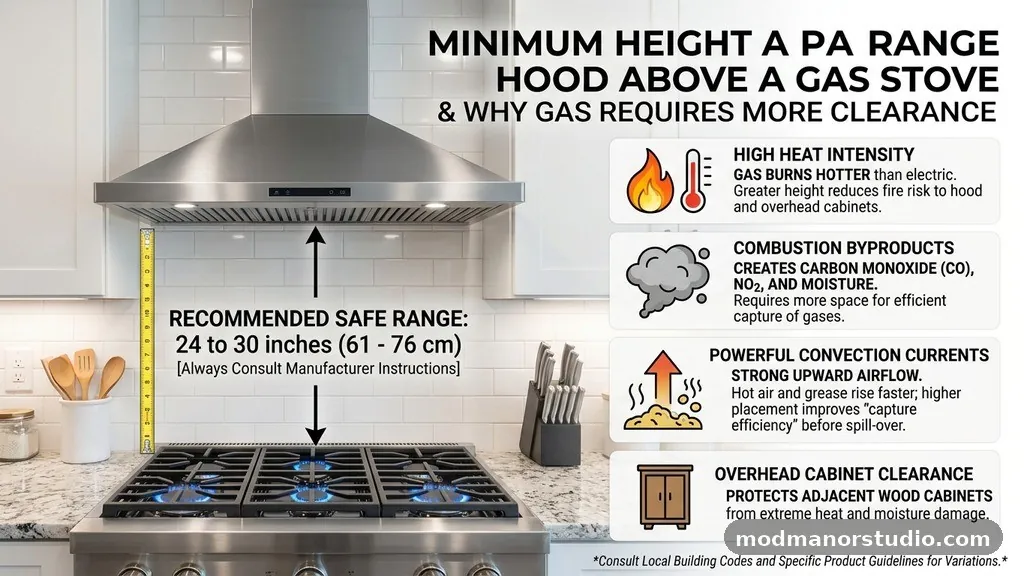
Gas ranges differ from electric models because they utilize an open flame, which creates a more volatile cooking environment. The heat output is not restricted to the surface of a pot; it extends into the surrounding air through convection. This creates a higher risk of the range hood catching fire if it is positioned too close to the flames.
Ventilation systems are designed to capture smoke, steam, and airborne grease particles generated during cooking. When a burner is active, the air temperature directly above it can spike rapidly. If the hood is too low, the air intake fans may struggle to handle the thermal load, potentially leading to motor failure.
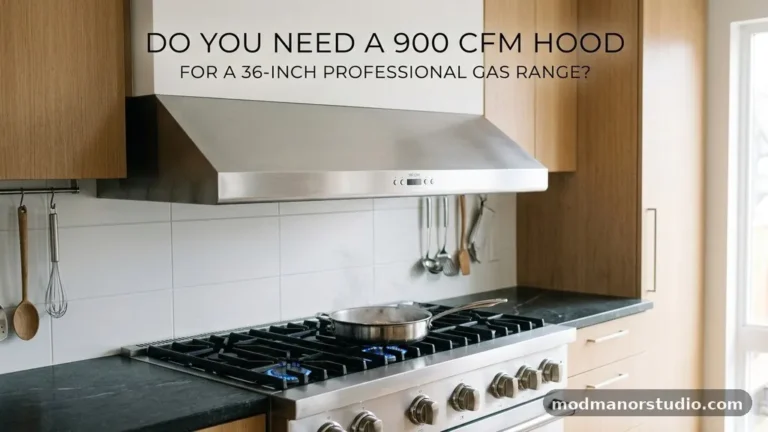
Professional-grade ranges often feature higher BTU outputs, which necessitate even stricter adherence to height guidelines. A home cook using a six-burner commercial-style range produces significantly more heat than a standard four-burner setup. In these cases, the 30-inch minimum is simply a starting point, and you may need to increase the gap to maintain safety.
Impact of Mounting Height on Performance
While safety is the primary driver for height requirements, ventilation performance is a close second. A range hood works by creating a low-pressure zone that pulls air toward the filters. If the unit is mounted too high, the “capture area” becomes too large, and the hood loses its ability to effectively trap pollutants.
When the hood is positioned higher than the manufacturer’s recommended range, smoke and grease have more space to disperse into the kitchen before they are captured. This results in lingering odors, persistent grease film on cabinets, and a less comfortable cooking experience. You essentially lose the efficiency of the blower motor because it cannot overcome the volume of air escaping its reach.
Finding the “sweet spot” involves balancing the need for head clearance with the need for air capture. Most experts suggest that for every inch you raise the hood above the 30-inch mark, you should increase the cubic feet per minute (CFM) rating of your fan. This compensates for the loss of capture efficiency by increasing the velocity of the airflow.
The Role of Local Building Codes
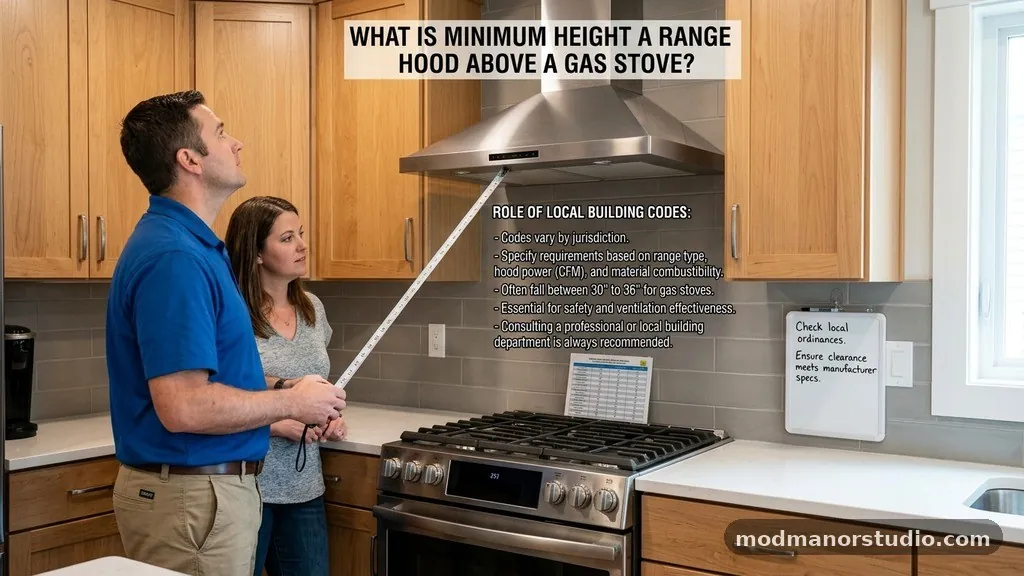
Local building codes often dictate the minimum height for a range hood above a gas stove to ensure uniform safety across residential properties. These codes are usually based on the International Residential Code (IRC) or similar regional standards. While the IRC provides a baseline, local municipalities may have amendments that make requirements more stringent.
Before you begin your installation, it is wise to verify these details with your local building department or a licensed contractor. If you are planning a kitchen remodel that requires a permit, the inspector will check the hood height during the final walkthrough. Failing to meet the code can result in a failed inspection, which may complicate future home sales.
Many homeowners mistakenly believe that these rules are merely suggestions, but they are legally binding in many jurisdictions. Adhering to these standards is not just about passing an inspection; it is about ensuring that your home’s ventilation system meets the safety criteria for fire prevention. You can find more information on standardized safety practices through the National Fire Protection Association.
Measuring Correctly for Your Installation
Accuracy is vital when calculating the mounting distance for your ventilation system. You must measure from the top of the gas burner grates, not the surface of the cooktop itself, as the grates represent the highest point of the heat source. Use a tape measure to mark the wall at the exact height specified by the manufacturer and the building code.
It is helpful to have a second person assist with the installation to ensure the hood is level. Even a slight tilt can affect the airflow and make the unit look unprofessional. Use a spirit level to verify that the mounting bracket or the hood body is perfectly horizontal before securing it to the wall or cabinet.
If you are replacing an existing hood, do not assume the previous owner installed it at the correct height. Measure the current setup and compare it to the requirements for your new appliance. You may find that you need to adjust your cabinetry or move the mounting hardware to satisfy the modern safety specifications for your specific model.
Common Mistakes During Range Hood Setup
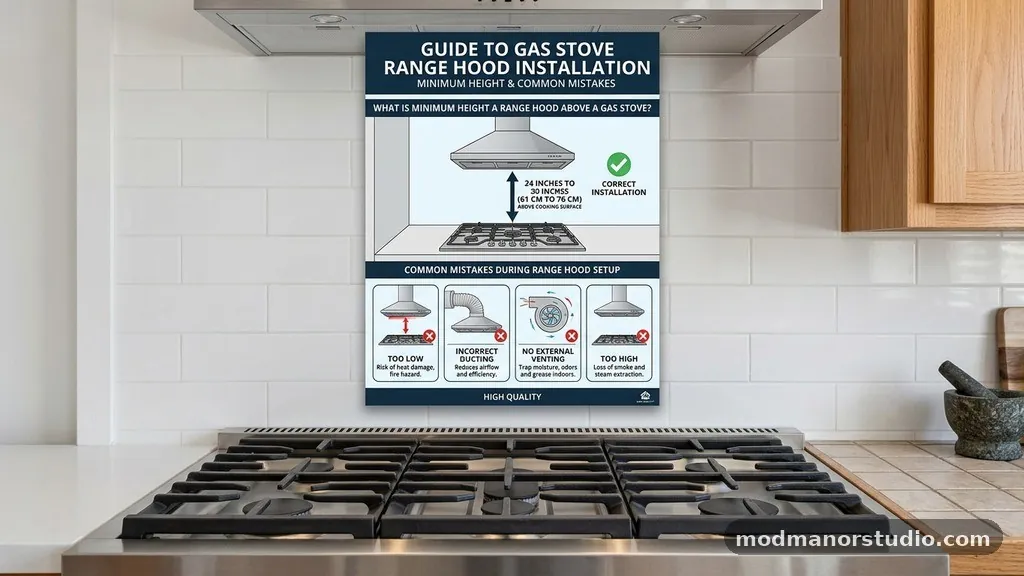
One of the most frequent errors is failing to account for the thickness of the backsplash material. If you install tiles or stone behind the stove, the thickness of that material can push the range forward or affect the placement of the mounting bracket. Always factor in the finished wall depth when determining the final position of your hood.
Another common oversight is ignoring the cabinet layout. If your hood is mounted between two upper cabinets, ensure there is enough space on the sides to meet the manufacturer’s clearance requirements for the cabinet finish. High heat can cause the lacquer or paint on wood cabinets to peel if they are positioned too close to the burner output.
Finally, some installers neglect the ductwork alignment during the initial height measurement. If the ductwork is pre-installed in the wall or ceiling, you are somewhat limited by where that vent is located. Make sure the height you select for the hood aligns properly with your existing venting path to avoid using excessive amounts of flexible ducting, which reduces fan efficiency.
Comparing Heights for Different Appliances
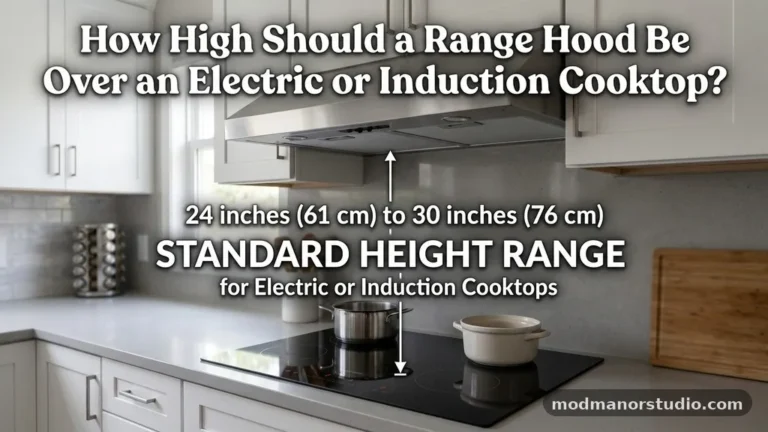
The height requirements for your ventilation system change based on the type of cooking surface you have in your home. Electric and induction cooktops do not produce the same open-flame intensity as gas, which gives you more flexibility in your layout. However, you should never install a hood lower than the manufacturer allows, regardless of the fuel source.
| Appliance Type | Recommended Minimum Height | Common Maximum Height |
|---|---|---|
| Gas Range | 30 Inches | 36 Inches |
| Electric Cooktop | 24 – 30 Inches | 36 Inches |
| Induction Cooktop | 24 – 30 Inches | 36 Inches |
| Professional Gas Range | 30 – 36 Inches | 42 Inches |
As shown in the table, gas ranges require a more consistent, higher clearance than their electric counterparts. When choosing a hood, always check the technical specifications provided by the manufacturer. Using a high-CFM fan with a professional range often requires the hood to be mounted at the higher end of the spectrum to ensure proper operation.
Safety Considerations for Over-the-Range Microwaves
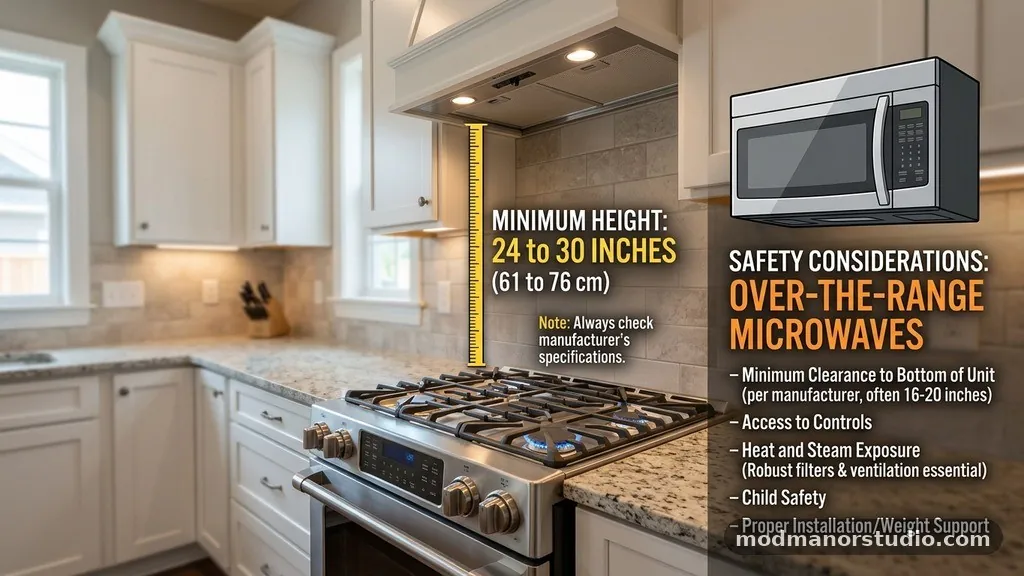
Many modern kitchens use over-the-range microwaves as a space-saving alternative to a dedicated range hood. These units are specifically designed to handle the heat from a stove, but they still have strict height requirements. Manufacturers often specify a minimum distance, typically around 30 inches, to maintain the integrity of the microwave’s internal components.
If you are installing a microwave, it is important to remember that they generally have lower CFM ratings than dedicated range hoods. This means they are less effective at clearing smoke and grease, especially when cooking with gas. You should ensure that the microwave is installed at the maximum height recommended by the manufacturer to prevent heat damage to the unit’s exterior shell.
Always read the installation manual for your specific microwave model. Some units have specific venting requirements that must be configured during installation. If you find the microwave is too low, you may have to reconsider your cabinet layout or choose a slimmer model to maintain the necessary clearance from the stove.
Frequently Asked Questions
Is there a legal code for range hood height?
Yes, most local building codes follow the International Residential Code (IRC) or manufacturer instructions, which typically mandate at least 30 inches of clearance for gas ranges.
Can I install my range hood higher than 30 inches?
You can, but you must be careful. Most manufacturers recommend a maximum height of 36 inches, as going higher significantly reduces the hood’s ability to capture smoke and grease.
Does the height requirement change for an island range hood?
Island hoods follow the same general height principles as wall-mounted ones, but because they are exposed on all sides, they may require a higher CFM rating to be effective.
What happens if I install the hood too low?
Installing a hood too low creates a fire hazard, as grease in the filters can ignite from the gas flames, and it can also cause the hood’s motor and finish to deteriorate prematurely.
How do I measure for the hood if I have a tall cook?
If the hood is at the standard 30-inch height and interferes with your workspace, you may need to look for a low-profile hood or adjust your cabinet design, but you should never compromise the safety distance to accommodate height preferences.
Best Practices for Long-Term Maintenance
Once you have established the correct mounting height for your range hood, regular maintenance is the next step to ensuring safety. Grease buildup in the filters is the primary cause of fires in ventilation systems. You should clean or replace these filters at least once a month, depending on how often you use your gas stove.
Check the blower motor and the interior of the ducting annually to ensure there is no significant grease accumulation. If you notice the fan is becoming louder or the suction power has decreased, it may be time for a professional cleaning. Keeping the air path clear ensures that the system works as intended within the safety parameters you set during installation.
Finally, keep an eye on the exterior finish of the hood. If you notice any signs of heat damage, such as peeling paint or warped metal, re-evaluate your setup immediately. Even if the hood was installed at the correct minimum height, an unusually high-heat cooking style might necessitate moving the unit further away from the burners.
Conclusion
Selecting the correct minimum height for a range hood above a gas stove is essential for both the longevity of your kitchen appliances and the safety of your home. By adhering to the 30-inch standard and checking manufacturer specifications, you ensure that your ventilation system operates at peak efficiency without becoming a fire risk. While local codes provide the foundation for these measurements, your specific range and hood combination may require minor adjustments to perform correctly.
Taking the time to measure accurately and consult professional guidelines during the installation process will prevent costly repairs and safety concerns down the road. If you have questions about your specific model, reach out to a local contractor or the manufacturer for guidance tailored to your kitchen’s unique layout.