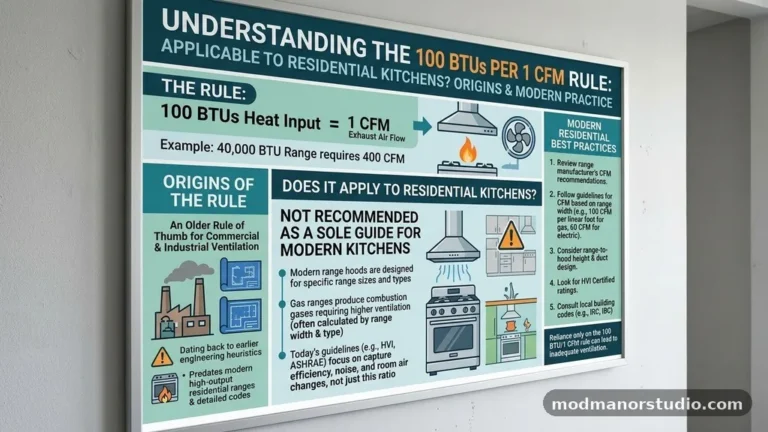
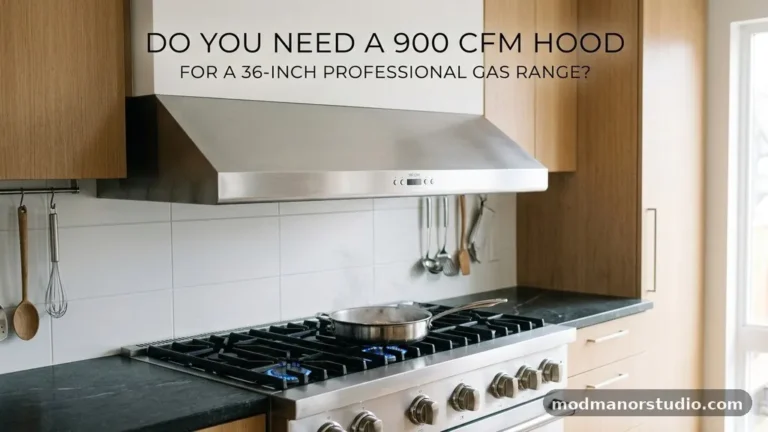
Standard Mounting Height for Under-Cabinet vs Wall-Mount Chimney Hoods
Deciding on the correct placement for your ventilation system is critical for both safety and performance in the kitchen. When considering the standard mounting height for under-cabinet vs wall-mount chimney hoods, you must account for the type of cooktop you own and the specific power of the unit.
Installing these devices too low creates a fire hazard, while mounting them too high leaves smoke and grease lingering in your workspace. This article provides the precise measurements and technical context you need to ensure your kitchen ventilation functions exactly as intended for long-term reliability and air quality.
Defining the Standard Height Range
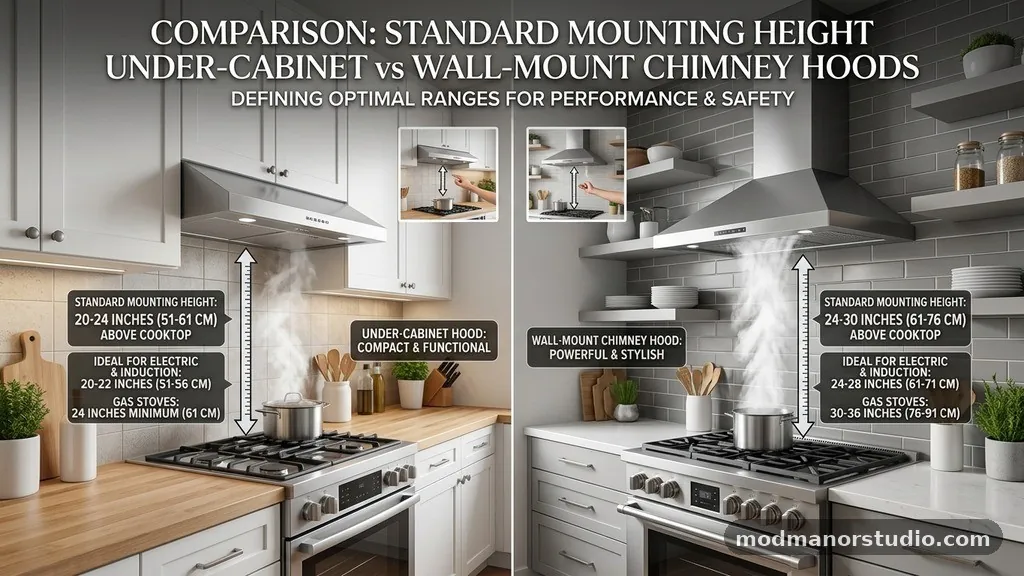
For most residential kitchens, the industry standard for range hood installation falls between 24 and 30 inches above the cooking surface. This range is designed to balance the unit’s ability to capture smoke and grease while keeping the appliance out of the way of the cook.
If you mount a hood below 24 inches, you risk heat damage to the unit’s finish or electrical components. Conversely, exceeding 30 inches often reduces the capture efficiency, allowing steam and odors to escape into the room.
Determining the exact spot within this range requires looking at your specific appliance manual. Manufacturers conduct rigorous testing to find the optimal point where suction power meets safety clearance.
Deviating from these manufacturer-provided numbers can void your warranty or create a genuine fire risk. Always prioritize the manual over general advice when you are ready to install your new vent hood.
Under-Cabinet Mounting Specifications
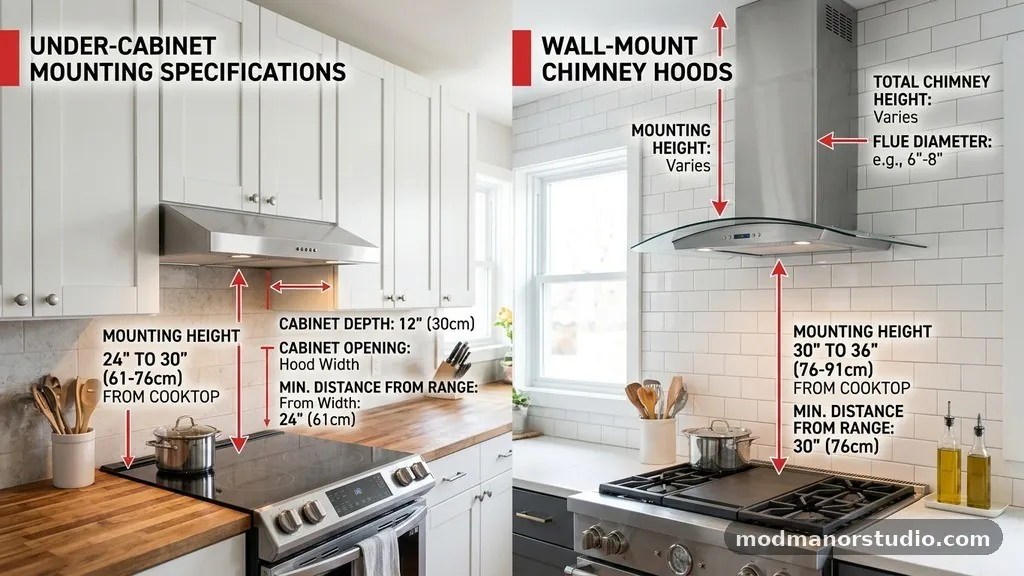
Under-cabinet range hoods are typically integrated directly into the cabinetry above your stove. Because these units are often less powerful than professional-grade chimney models, they require a specific clearance to pull air effectively.
Most experts recommend a height of 24 to 27 inches for these units. This tighter proximity helps compensate for the lower CFM (cubic feet per minute) ratings common in compact, under-cabinet designs.
When installing these units, you must ensure they do not impede your view or movement while you are working at the range. If the unit is mounted too low, it can become a physical obstacle during tasks like stirring large pots or flipping food. Always measure from the bottom of the hood to the top of the cooking grates, not the countertop surface, to get an accurate reading.
Wall-Mount Chimney Hood Requirements
Wall-mount chimney hoods offer a more aesthetic, standalone look and often feature higher airflow capacities than their under-cabinet counterparts. Because these units are designed to handle more intense cooking, they are frequently mounted slightly higher to accommodate larger pots and pans.
The standard recommendation for these hoods is often 28 to 32 inches above the range. This extra space prevents the metal chimney structure from interfering with your ability to navigate the cooktop.
The increased height is also a practical necessity for high-BTU gas ranges. Gas burners produce more heat and exhaust than electric or induction cooktops, requiring the hood to be positioned where it can capture the thermal plume without overheating. If you have a professional-style range, you should consult the National Fire Protection Association guidelines for residential kitchen safety to ensure your setup meets local building codes.
Comparing Installation Heights
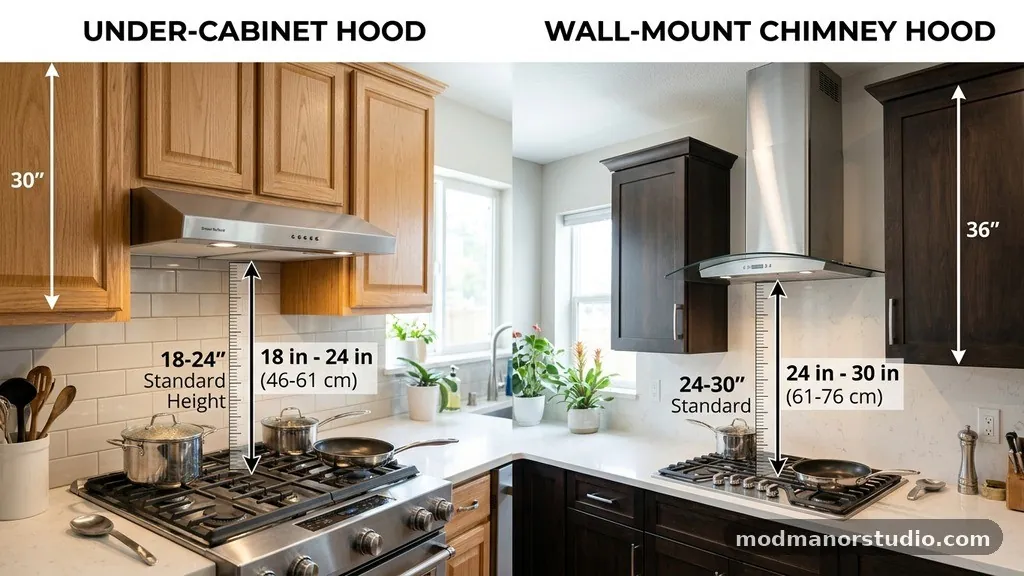
| Hood Type | Recommended Height (Inches) | Best Use Case |
|---|---|---|
| Under-Cabinet | 24 – 27 | Standard electric/induction |
| Wall-Mount Chimney | 28 – 32 | High-output gas ranges |
| Professional Grade | 30 – 36 | Industrial-style setups |
The differences in the table above highlight how the type of kitchen setup dictates the installation process. Under-cabinet models prioritize proximity for efficiency, while chimney hoods prioritize clearance for larger equipment. Choosing the right height ensures your investment in a new ventilation system actually improves your indoor air quality.
The Impact of Cooktop Fuel Source
Your choice between gas and electric ranges significantly influences your mounting height. Gas ranges produce an open flame and significantly more ambient heat, which can damage the filter and internal housing of a hood mounted too low.
Most manufacturers mandate a minimum of 30 inches for gas ranges regardless of the hood style. This extra buffer is a critical safety step to prevent accidental grease fires inside the ductwork.
Electric and induction cooktops are generally cooler and do not produce open flames. This allows for more flexibility, often letting you mount the hood at the lower end of the recommended range.
If you are replacing an old electric range with a new gas model, you may need to adjust your hood height to maintain safety standards. Failure to adjust for a fuel switch is a common cause of heat-related damage to kitchen cabinetry.
Assessing Capture Efficiency
Capture efficiency is the primary metric for how well a hood clears the air. When a hood is mounted too high, the “capture area” expands beyond the perimeter of the unit.
This causes smoke and steam to curl around the edges of the hood rather than being pulled into the exhaust stream. If you notice persistent odors or grease buildup on your cabinets, your hood is likely mounted too high.
Conversely, mounting a hood too low can create a “bottleneck” effect where air cannot circulate properly. The hood may be able to clear the air directly beneath it, but it might struggle to pull air from the peripheral burners. Finding the “sweet spot” within the manufacturer’s suggested range is the best way to optimize your hood’s performance.
Physical Constraints and Kitchen Design
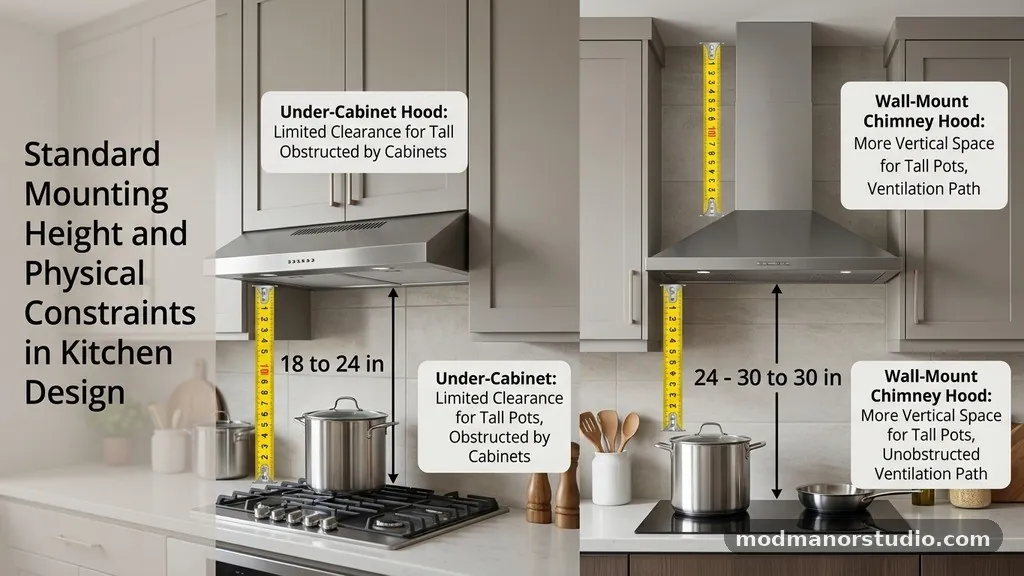
Designing a kitchen requires balancing aesthetics with the functional reality of your ventilation needs. You might want a chimney hood mounted high to create a dramatic visual statement, but this can compromise your air quality.
Alternatively, hiding a hood under a cabinet might be the only option in a small kitchen. You must reconcile these design desires with the technical requirements of the appliance.
Consider the depth of your cabinets and the width of your stove when determining the height. If your hood is narrower than your cooktop, you will need to be even more precise with your mounting height to ensure adequate coverage.
Never sacrifice safety or ventilation efficiency for the sake of a specific design look. A well-functioning kitchen is always more valuable than one that simply looks good but fails to clear smoke.
Safety and Local Building Codes
Always check your local building codes before finalizing the installation of your range hood. While manufacturers provide recommended heights, some local jurisdictions have strict ordinances regarding the distance between cooking surfaces and combustible materials. If your cabinets are made of wood or have a lacquer finish, your local inspector may require a greater distance than what the hood manufacturer suggests.
Non-compliance with these codes can lead to issues during home inspections or insurance claims if a fire occurs. When in doubt, lean toward the more conservative, higher mounting height.
It is much easier to manage slightly reduced efficiency than it is to deal with a damaged home or a failed inspection. Documenting your installation process can also be helpful for future home sales.
Tools Needed for Proper Installation
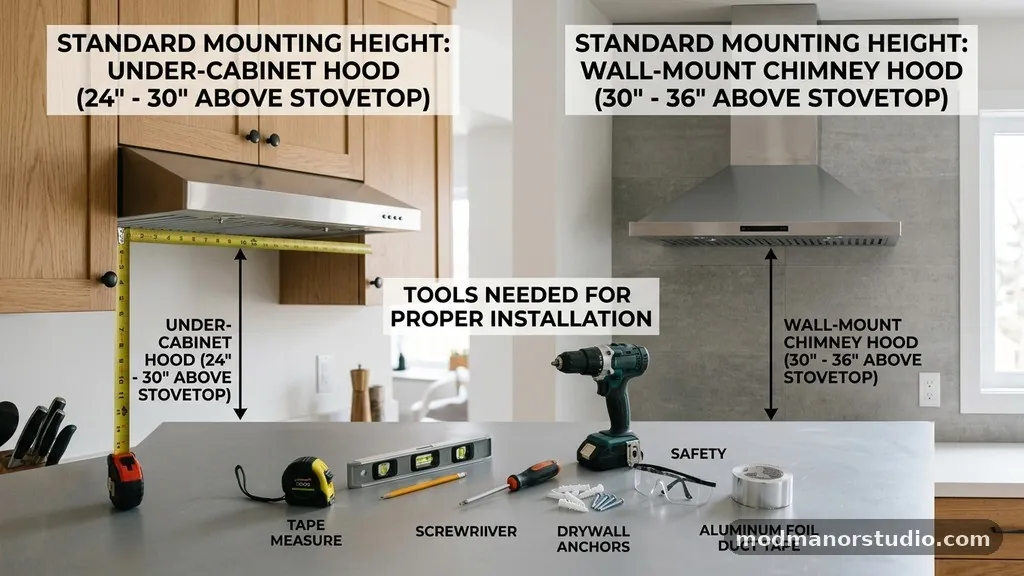
Installing a hood correctly requires more than just a drill and a level. You need to verify that your wall studs are capable of supporting the weight of the unit, especially for heavy chimney models. Most chimney hoods come with a mounting bracket that must be anchored directly into the wall studs or a backing board.
- A high-quality level to ensure the hood is perfectly horizontal.
- A stud finder to locate solid support for the heavy motor and housing.
- Ductwork tape for sealing connections to prevent air leaks.
- A tape measure to verify the exact distance from the cooktop.
- Safety goggles to protect your eyes from debris during drilling.
Taking the time to gather the right tools and materials will make the process much smoother. Don’t rush the measurement phase, as even a quarter-inch difference can affect how the hood looks and functions. A successful install is the result of careful planning and precise execution.
Common Mistakes to Avoid
One of the most frequent errors is measuring from the wrong reference point. Some installers measure from the countertop, but the only number that matters is the distance to the actual cooking surface or grate.
If you have a range with a thick grate, that adds to the height, and you must factor that in. Always double-check your measurements before you drill any holes into your wall or cabinetry.
Another mistake is neglecting the ductwork path. You might find the perfect height for the hood, but if the ductwork requires a sharp bend to reach the exterior vent, you will lose significant airflow.
Always align your hood height with the most efficient path for your exhaust duct. A straight, short run to the outside is always superior to a complex, winding path through the walls.
Frequently Asked Questions
Does the height change if I have a high-CFM hood?
Yes, high-power hoods are often designed to be mounted slightly higher because their motors are strong enough to pull air from a greater distance. However, you must always verify this against the manufacturer’s specific installation guide.
Can I install a hood at a custom height for a tall cook?
While you can adjust within the manufacturer’s recommended range, you should never go outside those bounds to accommodate height. If you are tall, look for a hood design that is thinner or provides more clearance at the corners to avoid bumping your head.
What happens if I mount the hood too close to the stove?
Mounting a hood too low can cause the unit to overheat, melt plastic components, or trigger a thermal shutdown. In extreme cases, it can also pose a fire risk if grease builds up on the filters and is exposed to excessive heat.
Is it better to vent outside or recirculate?
Venting outside is significantly more effective at removing heat, moisture, and odors. Recirculating hoods only filter the air and return it to the kitchen, which does not address the heat or moisture produced by cooking.
How often should I clean the filters?
You should clean your metal mesh filters every one to three months depending on how often you cook. Grease buildup can restrict airflow and force your motor to work harder, which may lead to premature failure.
Final Thoughts
Ensuring the standard mounting height for under-cabinet vs wall-mount chimney hoods is correct remains the single most important step in your kitchen ventilation project. By adhering to the manufacturer’s specific measurements and respecting the power requirements of your cooktop, you provide your household with a safe and effective cooking environment. Always verify your measurements twice, account for your specific fuel source, and check local building codes before you begin the physical installation.
If you find yourself unsure about the structural requirements or the electrical connections, consulting a professional installer is a wise investment. Proper planning now will save you from performance issues and safety concerns for years to come.