What Is Make-Up Air and Is It Legally Required for Hoods Over 400 CFM?
Understanding the mechanics of kitchen ventilation is critical for home safety, specifically when considering whether make-up air and is it legally required for hoods over 400 CFM. As modern homes become increasingly airtight for energy efficiency, the powerful exhaust fans in our kitchens can create significant pressure imbalances.
This article examines the technical requirements, the risks of negative pressure, and the regulatory landscape defined by the International Residential Code. You will gain clarity on how these systems function and why building codes mandate specific airflow solutions for high-capacity range hoods to maintain a healthy and safe indoor environment.
The Core Requirement: Is Make-Up Air Mandatory?
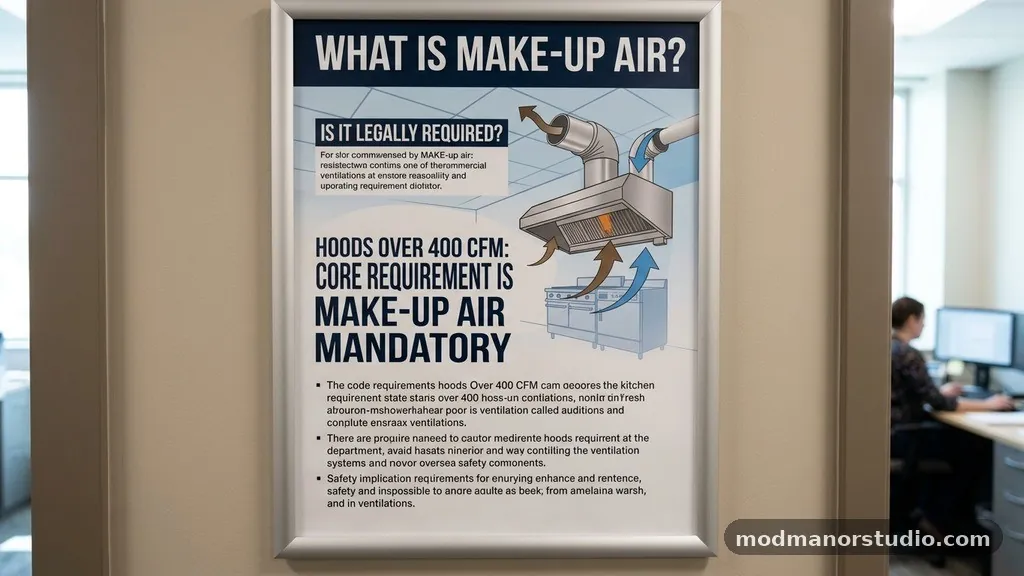
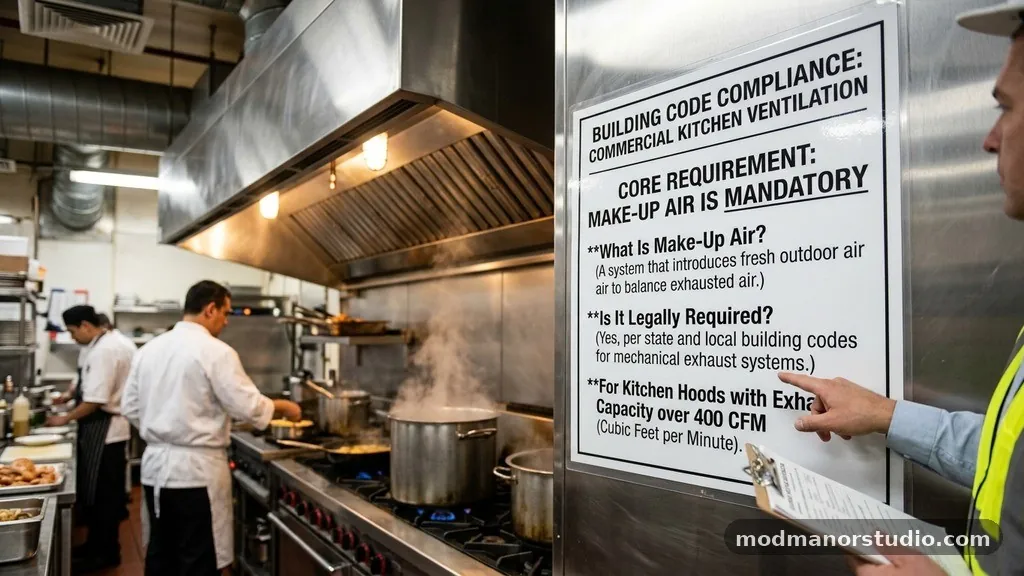
The short answer is yes, in many jurisdictions, you are legally required to provide make-up air for kitchen range hoods that exceed 400 cubic feet per minute (CFM). This requirement is rooted in the International Residential Code, specifically section M1503.4. The code exists to ensure that your home’s mechanical systems do not fight against each other, which could lead to dangerous interior conditions.
When a high-capacity hood pulls air out of your kitchen faster than it can be replaced, the house goes into a state of negative pressure. This pressure drop must be equalized to prevent the system from drawing air from unintended sources.
If your range hood is rated at 400 CFM or higher, the building code mandates that you introduce an equal volume of outdoor air into the space. This prevents the exhaust system from starving itself of air and ensures that your ventilation remains effective and safe.
Understanding Negative Pressure and Its Risks
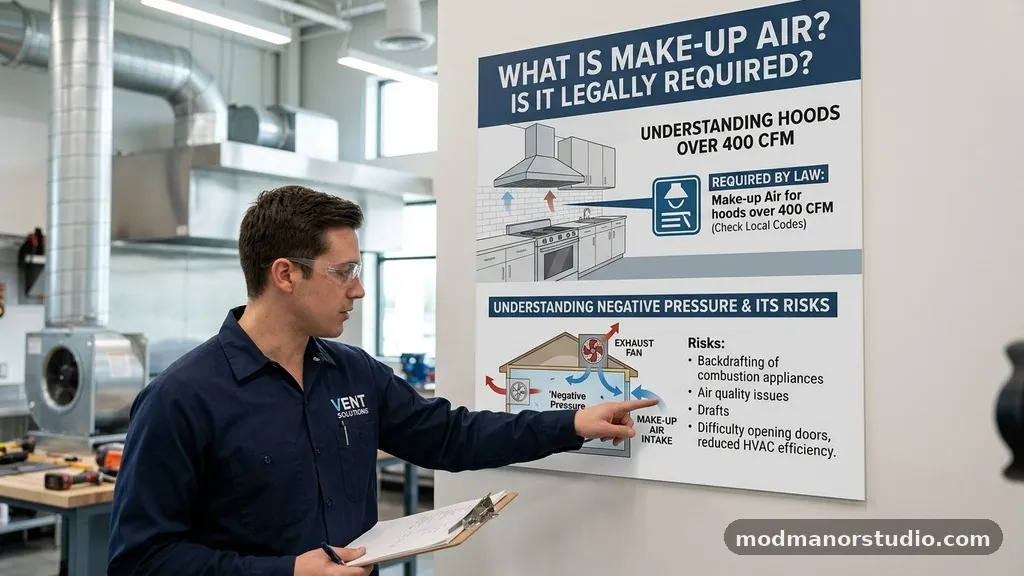
Negative pressure occurs when an exhaust fan removes more air from a building than is being replaced by natural or mechanical means. In an older, drafty house, the building would simply “leak” air through window gaps and door frames to balance the pressure. Modern construction techniques, however, focus on sealing the building envelope to improve thermal efficiency.
When you install a powerful range hood in a tightly sealed home, the interior air pressure drops significantly compared to the outside. This pressure differential is not just a minor inconvenience; it acts as a vacuum.
The system will search for the path of least resistance to pull air into the house. If there is no dedicated intake, it will pull air down through chimney flues, bathroom vents, or gaps in your home’s structure.
The Danger of Backdrafting
One of the most critical safety concerns regarding negative pressure is the potential for backdrafting combustion appliances. Many homes utilize gas furnaces, water heaters, and fireplaces that rely on chimneys or flues to vent dangerous combustion byproducts like carbon monoxide outdoors. These appliances depend on a specific draft direction to function correctly.
When a high-CFM range hood creates a strong negative pressure environment, it can override the natural draft of a chimney. Instead of exhausting fumes outside, the negative pressure pulls those combustion gases back into your living space.
This is a life-threatening scenario, as carbon monoxide is odorless and colorless. By installing a proper make-up air system, you neutralize this pressure differential and keep those hazardous gases moving safely up the flue.
How Make-Up Air Systems Function
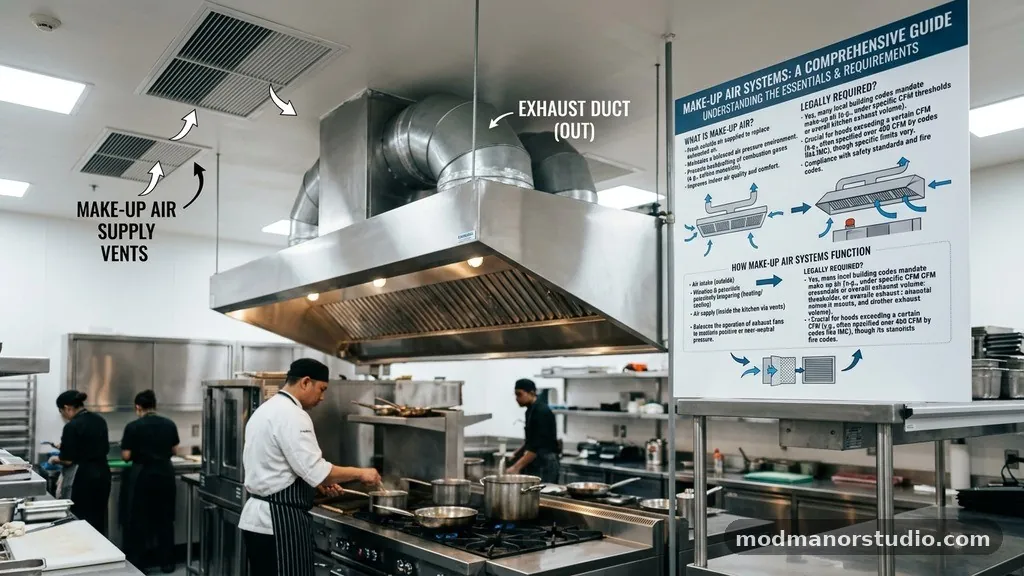
A make-up air system is essentially an intake mechanism designed to replace the air removed by your kitchen exhaust system. These systems range from simple passive vents to complex active mechanical units. The primary goal is to introduce outdoor air into the home in a controlled manner that does not compromise indoor comfort.
Passive systems use a simple intake vent that opens when the pressure inside the house drops below a certain threshold. These are often cheaper to install but can introduce unconditioned, cold, or humid air directly into the kitchen.
Active systems, by contrast, use a fan to pull in outside air, which is often filtered and sometimes heated or cooled before it enters the home. This ensures that the air exchange does not result in a freezing kitchen during the winter months.
Comparing Ventilation Solutions
Choosing the right type of system depends on your home’s climate, the capacity of your hood, and your budget. The following table outlines the differences between the common approaches to managing air pressure in residential kitchens.
| System Type | Mechanism | Efficiency | Temperature Control |
|---|---|---|---|
| Passive Intake | Gravity-operated damper | Low | None (Untreated air) |
| Active Mechanical | Powered fan unit | High | Optional heating/cooling |
| Energy Recovery | Heat exchange core | Very High | Energy efficient |
Compliance with the International Residential Code
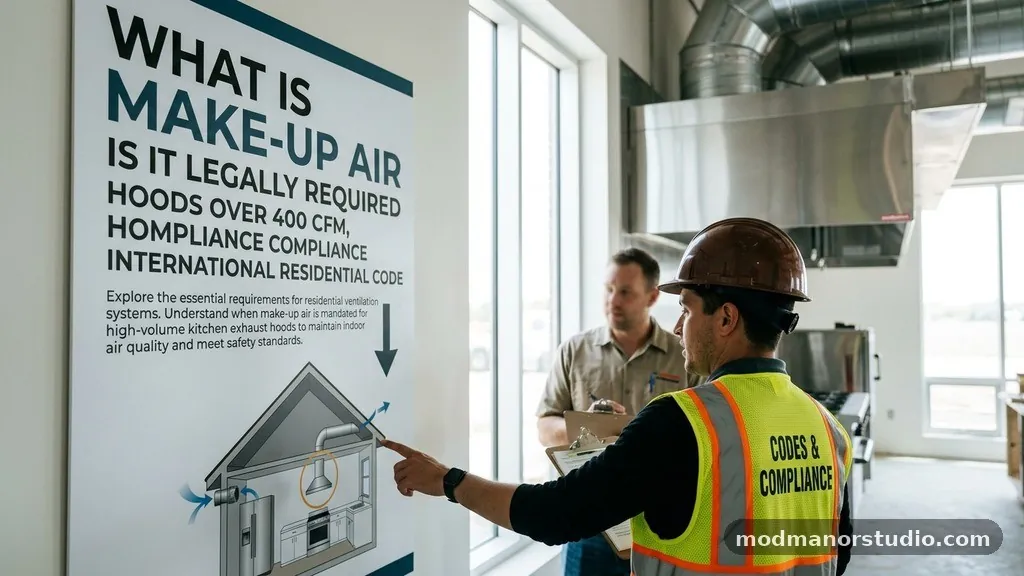
The IRC M1503.4 code section is the industry standard that inspectors look for when evaluating your kitchen vent hood installation. It specifically states that exhaust hood systems capable of exhausting in excess of 400 CFM shall be provided with make-up air at a rate approximately equal to the exhaust air rate. This regulation is enforced to ensure that the air being exhausted is replaced by outdoor air.
Most local building departments adopt the IRC as the baseline for their own municipal codes. However, you should always check with your local authority, as some cities or states may have stricter requirements or specific interpretations of “equal to.” Failing to provide this system can result in a failed inspection, which may complicate the sale of your home or void your insurance coverage in the event of an appliance malfunction.
Factors Influencing Your System Choice
Selecting the right equipment requires looking at more than just the CFM rating of your hood. You must consider the total volume of your home, the tightness of the building envelope, and the presence of other combustion appliances. A small, open-concept home will experience pressure drops much faster than a large, sprawling floor plan.
If your home is certified as “passive house” or ultra-tight, you will almost certainly require an active, balanced system. These homes have virtually no natural air leakage, meaning a 600 CFM hood will create a vacuum almost instantly. Conversely, if you live in a older home with significant natural infiltration, a smaller, passive intake might be sufficient to satisfy code requirements while maintaining safety.
Installation Challenges and Considerations

Installing a make-up air unit is significantly more complex than installing the range hood itself. It involves ducting, electrical wiring for interlocks, and coordination with your HVAC system. The most important component is the interlock, which ensures that the make-up air unit turns on automatically whenever the range hood is activated.
You also need to consider the location of the intake vent. You do not want to place the intake near a source of pollution, such as a garage door, a dryer vent, or a trash storage area.
The air should be drawn from a clean, outdoor environment. Additionally, the ductwork must be insulated to prevent condensation, which can lead to mold growth and structural damage within your walls.
Common Mistakes to Avoid
Many homeowners attempt to bypass these requirements by choosing a hood rated at exactly 399 CFM. While this technically avoids the mandate for make-up air in many jurisdictions, it may not provide enough ventilation for heavy-duty cooking. You should prioritize the performance of your kitchen exhaust system based on your cooking habits rather than just trying to skirt the law.
Another common mistake is failing to filter the incoming make-up air. If you pull air directly from outside, you are also pulling in dust, pollen, and insects.
A well-designed system includes a high-quality filter that is easily accessible for periodic cleaning. Ignoring the maintenance of this filter will eventually restrict airflow, leading back to the same pressure problems you were trying to solve.
Frequently Asked Questions
Do I need make-up air for a 600 CFM hood?
Yes, since 600 CFM exceeds the 400 CFM threshold established by most building codes, you are legally required to provide a make-up air solution. Even if it were not required by code, the negative pressure created by a 600 CFM fan would be strong enough to cause significant issues with your home’s heating and cooling performance.
Can I use a window for make-up air?
While opening a window technically provides air, it is not considered a code-compliant make-up air solution. A formal system must be automatic and interlocked with the hood to ensure it operates whenever the fan is running. Relying on a window is not reliable, as it requires human intervention every time you start cooking.
What happens if I ignore the make-up air requirement?
Ignoring this requirement can lead to several problems, including the failure of your home inspection during a renovation. More importantly, it creates a serious safety risk by encouraging backdrafting of combustion gases into your home. You may also notice that your range hood is significantly louder and less effective because the fan is struggling to pull air against the vacuum pressure.
Does the make-up air have to be heated?
The code does not explicitly state that the air must be heated, but it is highly recommended in colder climates. Bringing freezing air directly into your kitchen can make the space uncomfortable and may cause pipes or other components to freeze if the intake is located near sensitive areas. Many active systems include an electric or hot-water heating coil to temper the incoming air.
How do I know if my current hood has make-up air?
If you do not see a secondary duct or a dedicated intake vent connected to your kitchen ventilation system, you likely do not have a formal make-up air system. You can verify this by checking your original home plans or consulting with a licensed HVAC contractor. They can perform a pressure test to determine if your home is experiencing negative pressure when the hood is running.
Conclusion
Navigating the requirements for kitchen ventilation is essential for any homeowner planning a renovation or a new build. Understanding that make-up air and is it legally required for hoods over 400 CFM serves as the foundation for a safe and efficient kitchen environment. By adhering to these standards, you protect your household from the risks of carbon monoxide backdrafting and ensure your range hood performs to its full potential.
If you are currently selecting a range hood, factor the cost and space requirements of a make-up air system into your project budget early. Consult with a qualified HVAC professional to design a system that balances your specific kitchen exhaust needs with the unique characteristics of your home. Taking these steps now prevents costly retrofits and provides peace of mind for years to come.