Can a Wooden Range Hood Cover Catch Fire If Mounted Under 30 Inches?
Homeowners often worry about whether a wooden range hood cover can catch fire if mounted under 30 inches above the cooking surface. The short answer is yes, there is a significant risk of fire or heat damage when combustible materials like wood are placed too close to high-heat burners. While a decorative wooden exterior might look beautiful in a kitchen, it does not change the physical properties of the fuel source beneath it.
Manufacturers and safety codes establish specific clearance requirements to prevent ignition. Understanding these safety standards is essential for anyone planning a kitchen renovation involving custom cabinetry or exposed wood finishes near a stove.
The Physics of Heat and Combustible Materials
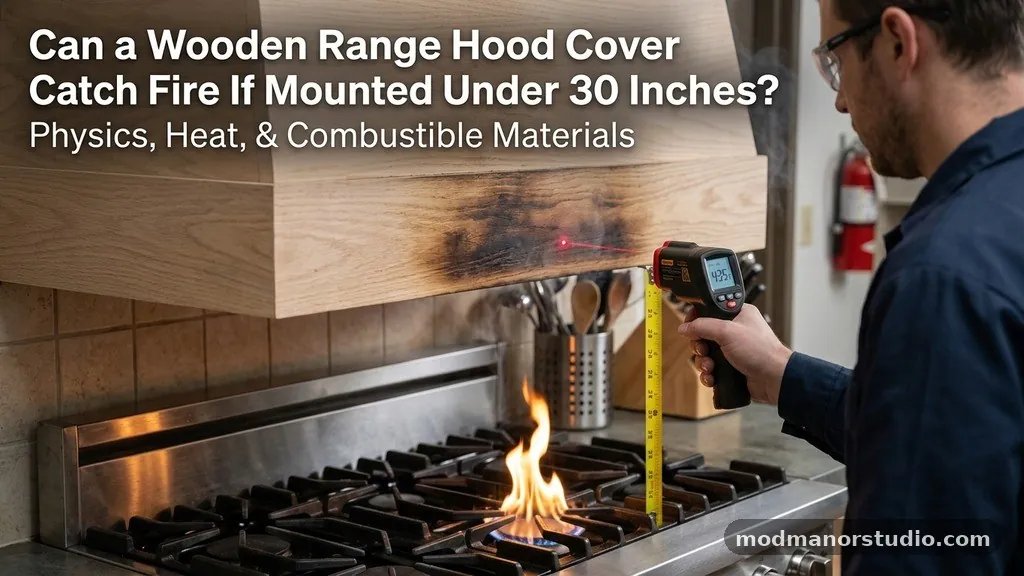
Wood is an organic material that begins to undergo thermal degradation long before it bursts into open flame. When you place a wooden range hood cover too close to a cooktop, you subject it to constant cycles of intense heat. Over time, this process dries out the wood, making it increasingly susceptible to ignition.
Most building codes and appliance manufacturer guidelines require a minimum clearance to keep the surface temperature of the wood below the point of spontaneous combustion. Even if the wood does not ignite immediately, excessive heat can cause warping, cracking, or finishes to bubble and peel. This degradation creates a rough, porous surface that is more likely to absorb grease.
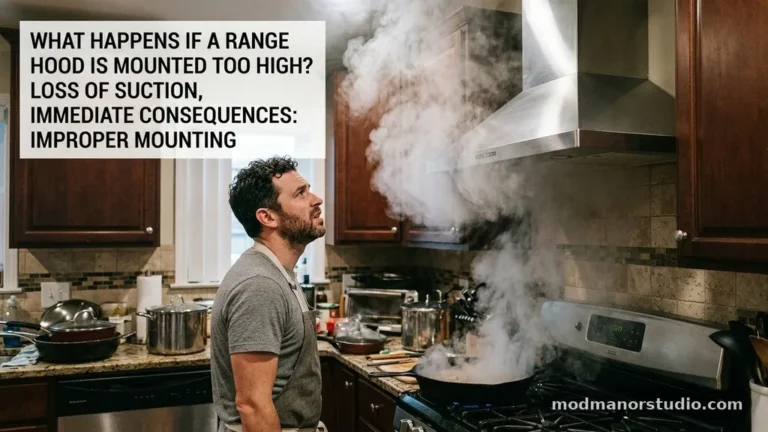
Grease accumulation is a critical factor in kitchen fire safety. If the wood is mounted too low, the range hood ventilation system may struggle to pull all steam and airborne fat particles away from the hood surface.
Once those particles settle on the heated wood, they create a highly flammable film. This combination of heat and fuel significantly increases the danger compared to a properly installed unit.
Understanding Manufacturer Clearance Requirements
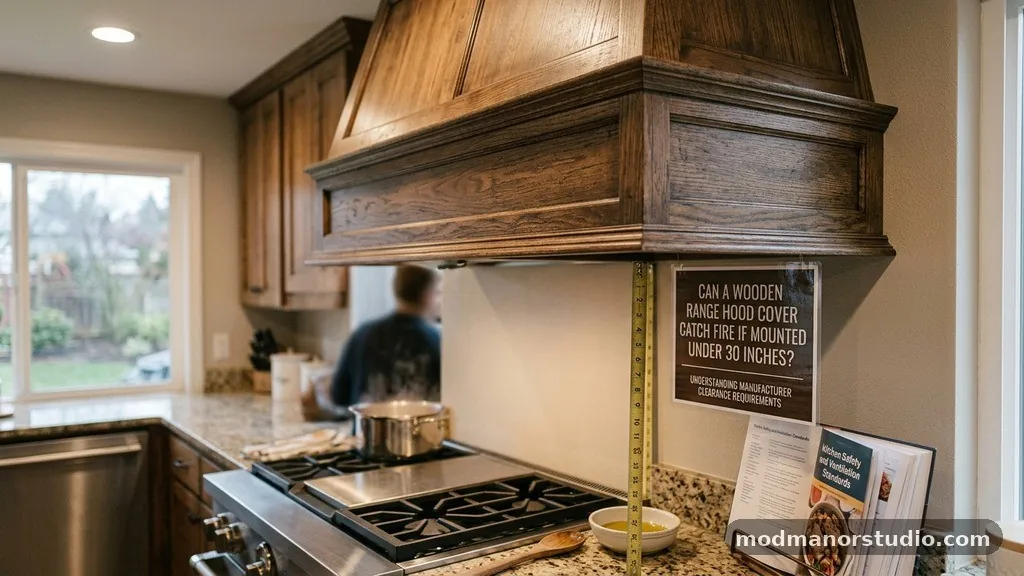
Every appliance manufacturer provides an installation manual that specifies the exact distance required between the cooking surface and the hood. These specifications are not suggestions; they are engineering mandates based on the heat output of the burners. When a manual states that a range hood must be installed at a specific height, it assumes the use of non-combustible materials or proper heat shielding.
If you ignore these guidelines, you effectively void the appliance’s warranty. More importantly, you bypass the safety testing that the product underwent during its development. Manufacturers test their units with specific clearances to ensure that the surrounding cabinetry remains within safe temperature limits during heavy use.
Installing a wooden cover at a height lower than the manufacturer’s recommendation creates a liability. If a fire were to occur, insurance companies often investigate the installation details.
If they find that the hood was mounted in violation of the manufacturer’s provided safety instructions, they may deny a claim. Always check your specific model’s manual before finalizing your cabinet design.
The Role of Ventilation in Fire Prevention
A range hood is primarily a ventilation device, not just a decorative cover. Its job is to capture smoke, heat, and grease-laden air before it reaches the surrounding cabinets. When you mount a hood too low, you may inadvertently interfere with the airflow pattern of the fan.
Proper ventilation relies on the “capture area” of the hood. If the hood is too low, the fan might not be able to pull air from the peripheral burners effectively.
This allows heat to build up around the edges of the wooden cover rather than being pulled through the filter. This stagnant hot air is exactly what causes the wood to char over time.
Additionally, a properly sized fan is vital for maintaining a safe environment. If your hood is mounted at the correct height but the fan is undersized for your cooktop’s BTU output, heat will linger. Always ensure your fan’s cubic feet per minute (CFM) rating matches the intensity of your cooking habits.
Heat Shielding and Protective Measures
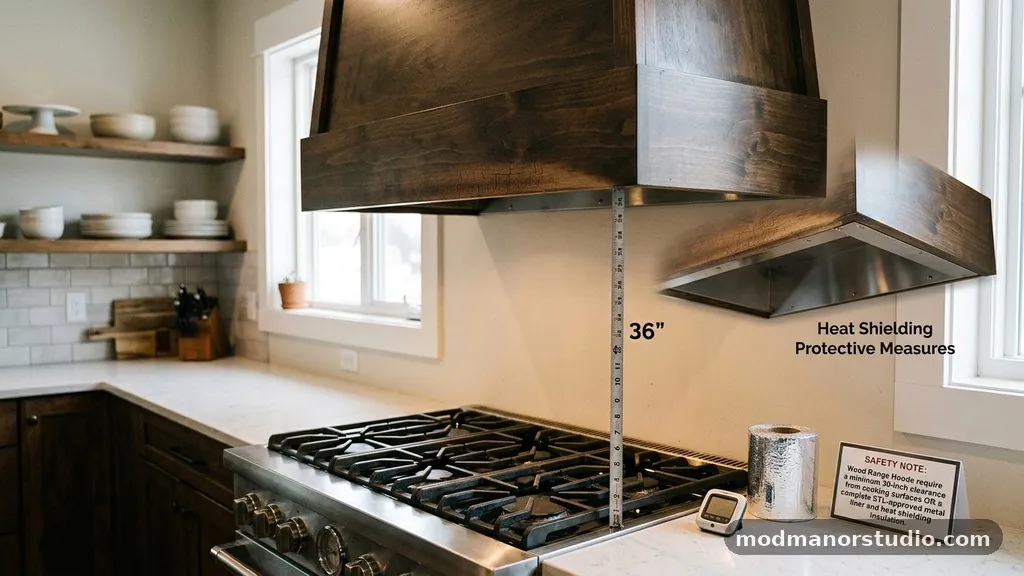
If you are determined to have a wooden aesthetic, you must incorporate heat shielding. This often involves lining the interior underside of the wooden hood with stainless steel or other non-combustible materials. These liners act as a thermal barrier between the heat source and the wood.
Steel liners are standard in most professional-grade kitchen designs. They reflect radiant heat away from the wood and prevent direct contact with high-temperature air. When installing these liners, ensure they cover all exposed wood surfaces, including the edges and the underside of the mantle.
Some homeowners use fire-retardant sprays or paints on their wooden hoods. While these products can offer a small degree of extra protection, they are not a substitute for proper clearance. Do not rely on chemical treatments to compensate for a design that violates safety codes.
Comparing Clearance Requirements by Fuel Type
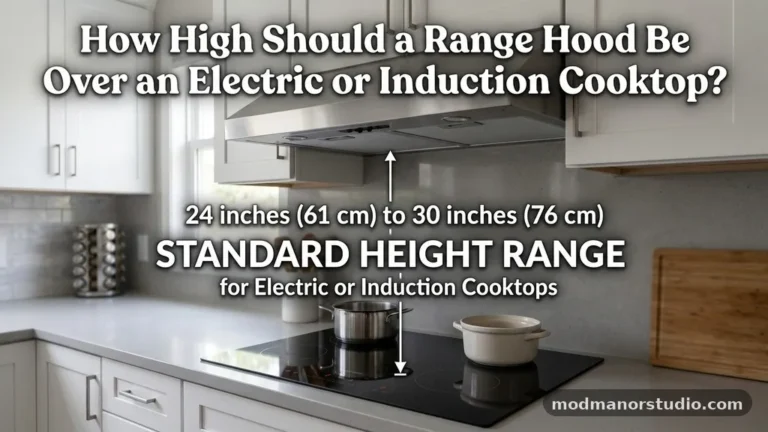
Different cooking surfaces produce vastly different amounts of heat. A gas cooktop, for instance, produces open flames and significant ambient heat that rises directly into the hood. An electric or induction cooktop is generally more contained, but still generates enough heat to damage wood if placed too close.
The following table summarizes general industry guidelines for hood clearance. Note that your specific appliance manual will always take precedence over these general figures.
| Cooktop Type | Minimum Recommended Clearance | Risk Level |
|---|---|---|
| Electric/Induction | 24 to 30 inches | Moderate |
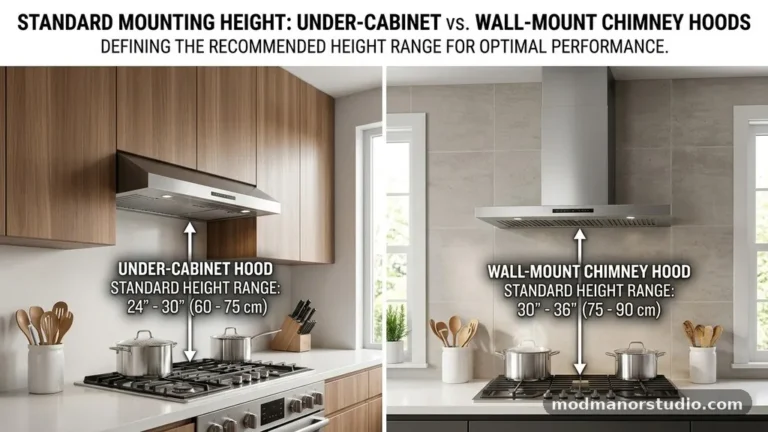
| Standard Gas | 30 to 36 inches | High |
| Professional Gas Range | 36 to 42 inches | Very High |
Always verify these distances with your local building inspector. Some jurisdictions have stricter codes than the manufacturer’s minimums. Local fire safety regulations in your area may also dictate the type of materials allowed near a stove.
Common Mistakes in DIY Hood Installation
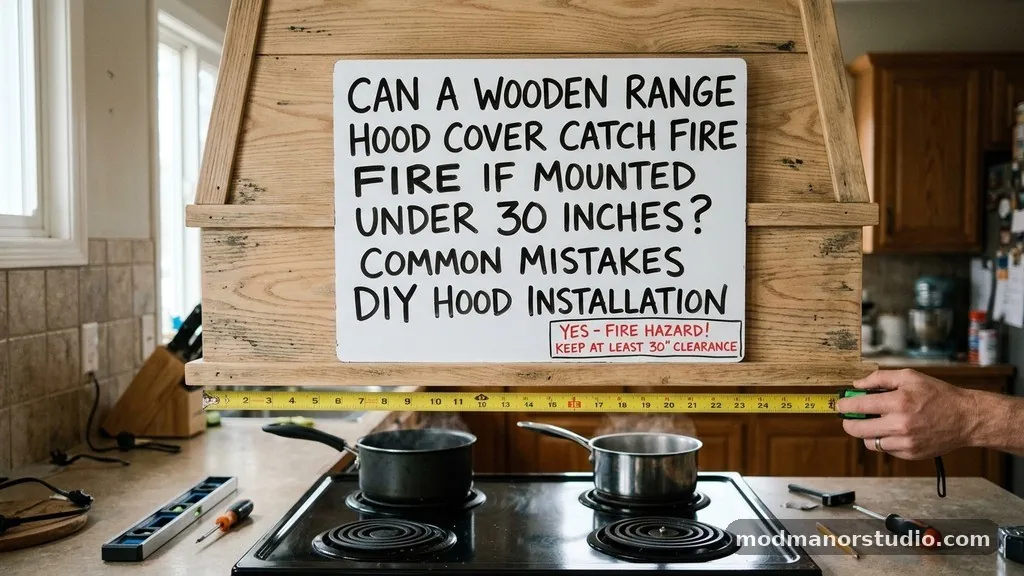
Many DIYers make the mistake of prioritizing the “look” of the kitchen over the functional requirements of the equipment. They might build a heavy, ornate wooden structure that looks perfect in a design magazine but lacks the necessary ventilation depth. This often leads to the hood being pushed too low to accommodate the design, which is a dangerous error.
Another frequent mistake is failing to account for the thickness of the filter and the insert. If your plan accounts for the bottom of the wood but ignores the depth of the metal insert, you might end up with a configuration that is actually closer to the heat source than you intended. Always measure from the very lowest point of the hood structure.
Finally, some installers neglect the importance of the backsplash material. If the wood extends down the wall behind the stove, it is effectively part of the cooking zone.
Ensure that all materials in that immediate area are rated for high-heat environments. You can learn more about official safety standards from the National Fire Protection Association regarding residential cooking safety.
Identifying Signs of Heat Damage
If your wooden range hood is already installed at a height lower than 30 inches, you should inspect it regularly for signs of distress. Even if you haven’t had an incident, the wood may be telling you that it is too close to the heat. Look for these warning signs:
* Discoloration or darkening of the wood finish, particularly near the edges.
* Peeling or bubbling paint or varnish, which suggests the wood is drying out.
* Visible cracks or warping in the panels, showing that the wood is expanding and contracting due to heat.
* A persistent smell of scorched wood when the stove is in use.
* Grease build-up that has become hardened and difficult to remove from the underside.
If you notice any of these signs, you should take immediate action. This might involve raising the entire hood unit or installing a stainless steel heat shield. In some cases, the only safe solution is to replace the wooden components with non-combustible materials.
Safe Design Alternatives
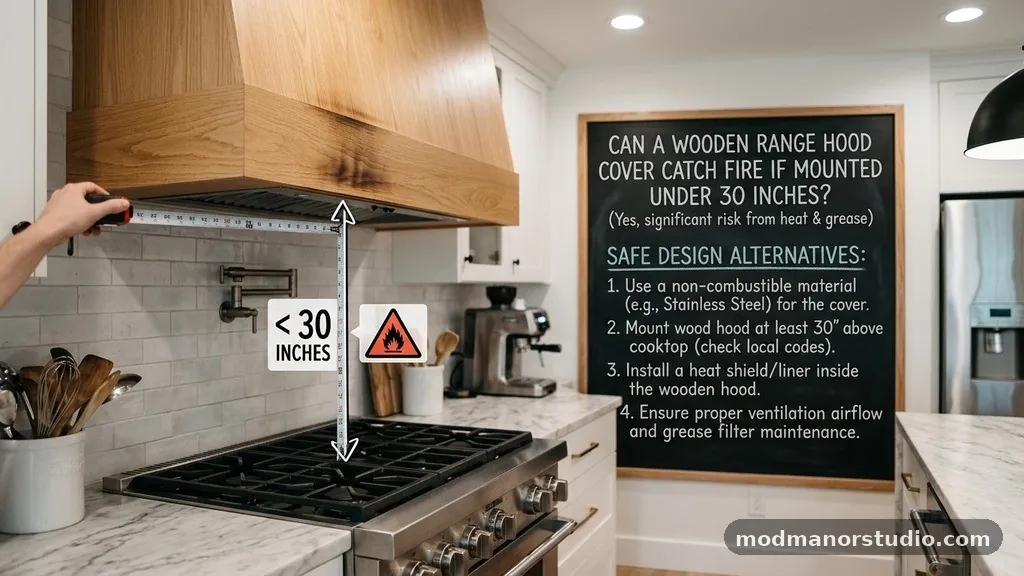
If you want the warmth of wood in your kitchen but need to maintain safety, consider a hybrid approach. You can use wood for the decorative exterior of the hood while keeping the interior structure entirely metal. This allows you to have the visual appeal of a custom wood hood without the fire risk.
Another option is to raise the height of your cabinets to accommodate a higher hood placement. While this might require changing your kitchen layout, it is a permanent solution that adheres to safety standards. Many modern designs look fantastic with a higher-mounted hood, as it provides a clearer view of the cooktop.
You can also opt for a “floating” look where the wooden portion of the hood is positioned higher up, while a stainless steel chimney or extension connects it to the cooktop. This creates a visual break that signals safety while still incorporating your desired materials. Consult with a professional cabinet maker to see how they can integrate metal safety components into a custom wood design.
The Importance of Professional Installation
Installing a range hood is more than just mounting a box to the wall. It involves connecting the ventilation system, ensuring the ductwork is properly sealed, and verifying that the unit is level and secure. When you add a heavy wooden cover to the mix, the weight and structural requirements increase significantly.
Professional installers are trained to recognize the hazards associated with combustible materials. They will ensure that the hood is not only mounted at the correct height but also that it is structurally sound. A loose or poorly mounted hood can sag over time, potentially moving closer to the burners than it was when first installed.
Furthermore, professionals can help you navigate local building codes. They are often aware of specific requirements in your area that might not be obvious to a casual renovator. Investing in a professional installation provides peace of mind and ensures that your kitchen remains a safe environment for your family.
FAQ: Common Safety Questions
Is it ever safe to mount a wooden hood closer than 30 inches?
Generally, no. Unless the manufacturer explicitly states a lower clearance in their manual and you have installed industrial-grade heat shielding, you should stick to the 30-inch standard. The risk of fire or damage is simply too high when dealing with wood.
Can I use a flame-retardant coating to lower the height?
No, chemical coatings do not change the physical clearance requirements set by manufacturers. While they might provide a slight delay in ignition, they do not prevent the heat damage that occurs from constant exposure to high temperatures.
What if my range hood is electric instead of gas?
Electric and induction cooktops still produce significant heat. While they lack the open flame of gas, they can still scorch wood and ignite grease. Always follow the manufacturer’s clearance guidelines regardless of the fuel source.
Does a wooden hood cover need special maintenance?
Yes, you must keep the underside free of grease. Accumulated grease is highly flammable and can catch fire even if the wood itself is at a safe distance from the burners. Regular cleaning is essential for fire safety.
How do I know if my hood is at the right height?
Measure from the top of your cooking surface to the lowest point of the hood. Compare this number against the “installation clearance” section of your range hood’s manual. If you have lost the manual, look up the model number online to find the digital version.
Conclusion
Asking if a wooden range hood cover can catch fire if mounted under 30 inches is a vital step in maintaining a safe kitchen. The reality is that wood is a combustible material, and it requires adequate distance from heat sources to remain safe. By adhering to manufacturer guidelines, using proper heat shielding, and maintaining clean surfaces, you can enjoy the aesthetic benefits of a custom hood without compromising your home’s safety.
Always prioritize the structural and thermal requirements of your appliances over the visual design of your cabinetry. If you find your current setup is too close to the heat, consider modifying the design or adding protective barriers.
Creating a beautiful kitchen is only successful if that space is also safe for daily use. If you have concerns about your specific installation, consult with a licensed contractor or your local building department to ensure you are meeting all necessary safety codes.